




 Bird & Pigeon Pest Control
 MOUSE & RAT Pest Control
 Fly Pest Control
 Cockroach Pest Control
 Mosquito Pest Control
 Mole Pest Control
 Wasp Pest Control
 Moth Pest Control
 Bed Bug & Flea Pest Control
 Ant & Termites Pest Control
 Spider Pest Control
 Other Insect Pest Control
 Snake Pest Control
 Snail & Slug Pest Control
 Wildlife Pest Control
 Garden Products
 Virus Control
 Smart AI Trap
 Insecticides


Industry News
How to Install Bird Netting in Cold Storage Loading Docks | FliesTrap
 By
2026-10-07
read
By
2026-10-07
read

.jpg)
Introduction — Scenario Pain Point
Birds don't care about your temperature logs. A single feral pigeon or Indian myna entering a cold storage staging dock contaminates pallets within minutes. Droppings land on shrink-wrap, feathers get pulled into evaporator fans, and an unannounced BRCGS or FSMA inspection turns into an immediate critical non-conformance.
Food distribution centers across Brisbane, Sydney, and Melbourne face this exact headache every morning. Fast-acting dock doors open hundreds of times per shift, creating an easy flight corridor for birds seeking shelter from the Australian sun.
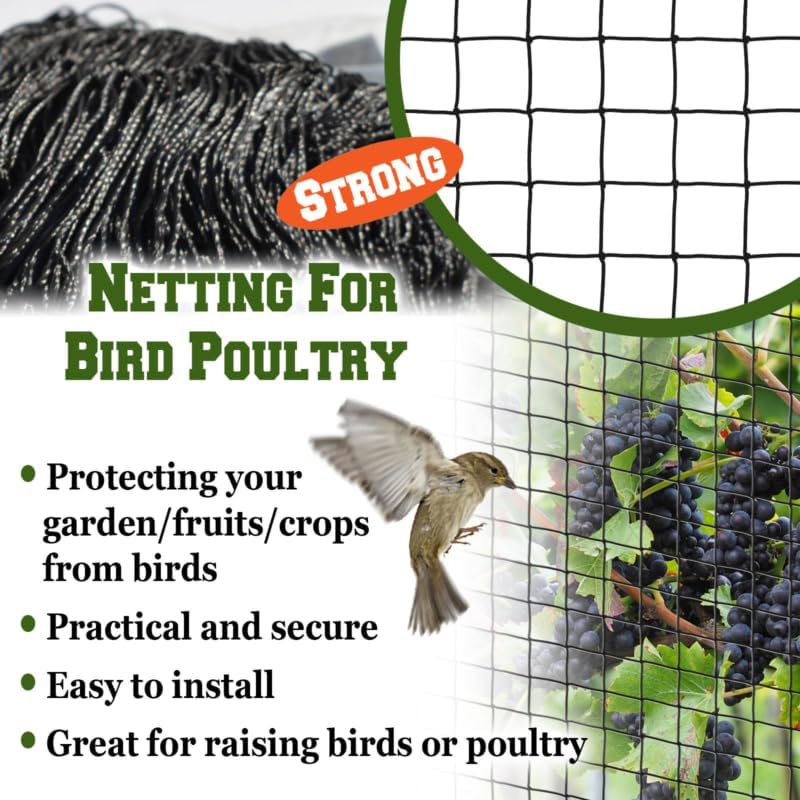
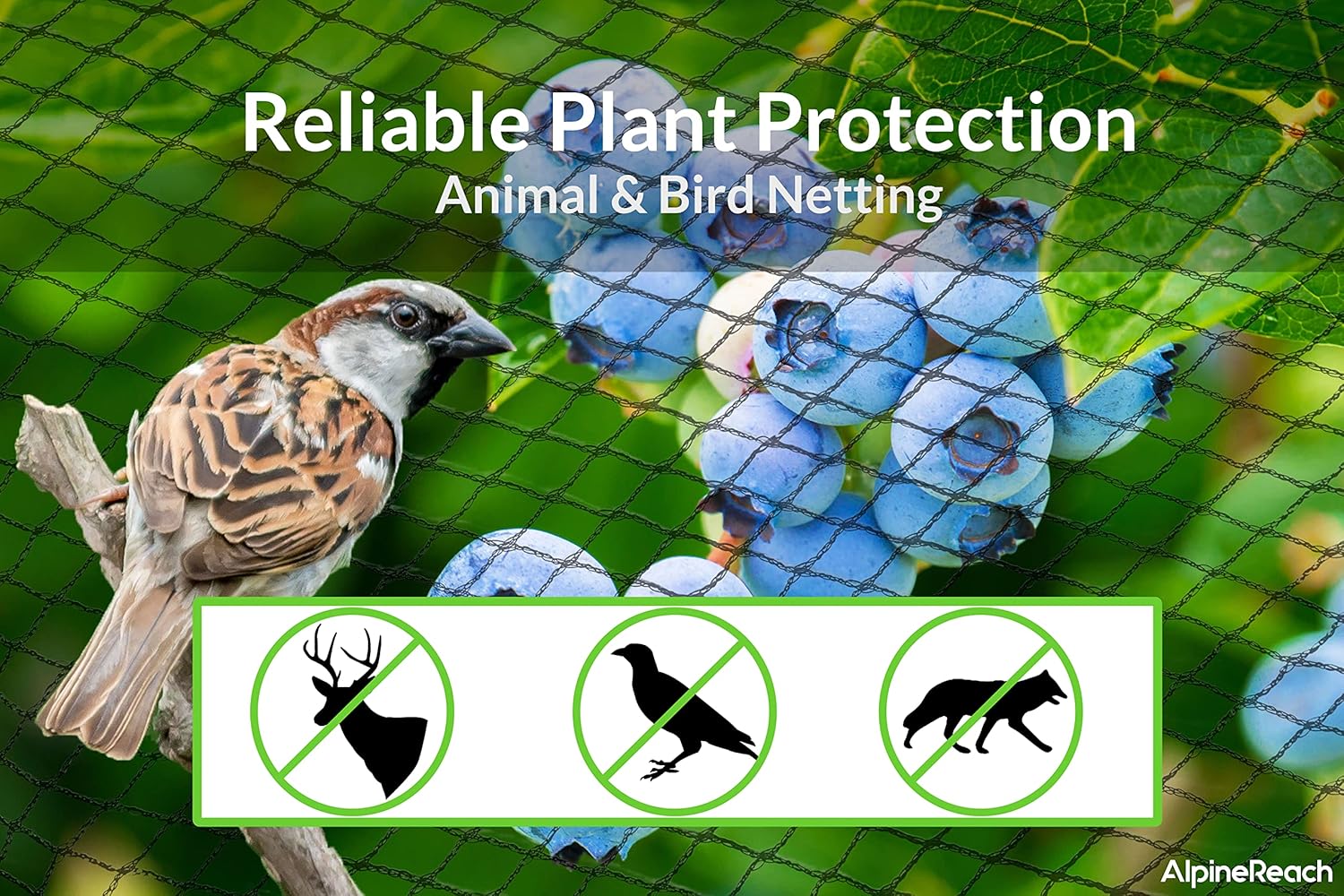
Chemical baiting is off the table near exposed food handling zones. Auditing bodies demand non-toxic, verifiable physical exclusion. That is why high-tensile Nylon Bird Proof Netting serves as the standard physical barrier for commercial loading docks and cold chain staging areas.
When you install netting over high-clearance dock bays, it has to withstand constant forklift turbulence, mechanical door vibration, and heavy thermal shifts without sagging. We've spent 18 years manufacturing and field-testing structural exclusion hardware. This practical guide covers the exact structural prep, perimeter cable tensioning, and rigging protocols you need to secure cold storage operations.
+-------------------------------------------------------------------------+
| TYPICAL COLD STORAGE INGRESS PROFILE |
+-------------------------------------------------------------------------+
| [External Yard] ---> [Dock Roller Doors] ---> [Refrigerated Staging] |
| Target Species: Thermal Leakage: Nesting Havens: |
| - Pigeons - Warm Air Rises - I-Beams |
| - Starlings - Condensation Pockets - Cable Trays |
| - Indian Mynas - Insect Gathering - Evaporator Housings |
+-------------------------------------------------------------------------+
| SOLUTION: Structural Nylon Bird Proof Netting + Perimeter Cable Rigging |
+-------------------------------------------------------------------------+
Root Cause & Structural Triggers in Australian Facilities
Why do birds target cold storage facilities? It comes down to thermal dynamics and structural architecture.
Refrigerated warehouses generate significant exhaust heat around condenser banks, while loading docks create a constant exchange of conditioned and ambient air. This warm air boundary layer attracts flying insects. Pigeons and swallows follow the food source right through open dock seals. Once inside, the overhead structural steel—open-web joists, electrical conduits, and fire suppression pipes—offers predator-free roosting ledges directly above active freight lanes.
Australian environmental conditions accelerate structural pest pressures. Under intense UV radiation in Queensland and Western Australia, substandard netting materials degrade quickly. Polyethylene meshes without proper UV stabilization become brittle and snap within twelve months.
Some maintenance managers attempt temporary fixes using standard lightweight mesh, such as a thin bird net for garden applications, but these light-duty garden nets tear under dock wind loads. A proper commercial installation requires high-density knotted nylon or marine-grade polymers designed to handle high mechanical stress.
According to technical surveys published by PCT Online, structural bird intrusion accounts for over 23% of secondary pest infestations in temperature-controlled logistics, including dermestid beetles and bird mites. European monitoring data from CEPA reinforces this reality. Physical barriers must completely close off structural voids, or birds will simply exploit the gaps between the net perimeter and wall cladding.
Understanding these physical entry dynamics helps your team design an exclusion system that survives real-world warehouse abuse.
[High-Level Structural Joists / Cable Trays]
========================================================= <-- Netting Barrier Plane
| |
| [304 SS Perimeter Cable with Turnbuckles] |
| =============================================== |
| |
v v
[Fast-Action Dock Door 1] [Fast-Action Dock Door 2]
Complete Physical Exclusion Strategy
A bird management program never relies on a single net panel thrown over an opening. Effective Integrated Pest Management (IPM) connects exterior deterrence with interior structural exclusion.
Before stringing high-tension cable across your bays, examine the peripheral building envelope. Birds frequently stage on exterior parapets and window ledges before making a flight run into an open dock.
For dock office windows and glass viewing panels, reflective collisions and staging behaviors pose another problem. Installing a UV-reflective Glass Windows Bird Proof Sticker array prevents exterior window strikes and discourages territorial birds from perching on low-level sills.
In external truck yards where netting isn't practical, visual and tactile deterrents provide an added layer of deterrence. A well-placed Scarecrow Fake Owl with Rotating Head helps disrupt staging patterns along rooflines when rotated weekly to prevent habituation.
When facilities integrate their bird barriers with broader pest programs, structural hardware works in tandem with floor-level monitoring. Professional installers often integrate a Bird Shock Tracker on architectural ledges just outside high-traffic dock headers. This setup discourages stubborn flock leaders from loitering near door thresholds.
Whether you work with an international red anti-aves distribuidor, source commercial systems via "bird deterrent systems wholesale UK" networks, or rely on our factory directly, your hardware must match the structural demands of the building.
Step-by-Step Installation Guide for Cold Storage Netting
Installing high-span netting across commercial docks requires careful sequencing. Do not cut netting panels before your perimeter frame is fully tensioned. Follow this five-step installation procedure used by professional PCO installation crews.
+-------------------------------------------------------------------+
| 5-STEP STRUCTURAL NETTING WORKFLOW |
+-------------------------------------------------------------------+
| 1. Structural Audit & Anchor Point Mapping (304 SS / Concrete) |
| 2. Perimeter Wire Rigging & Turnbuckle Tensioning (100kg+ load) |
| 3. Hanging & Fastening Nylon Bird Proof Netting (Hog Ring Spacing)|
| 4. Installing Heavy-Duty Access Zippers for Maintenance Access |
| 5. Glazing Protection & Secondary Exterior Deterrent Setup |
+-------------------------------------------------------------------+
Step 1: Structural Audit and Anchor Point Mapping
Map out every overhead obstacle within the cold dock bay. Note all fire sprinkler heads, lighting ballasts, air curtains, and overhead door track clearances.
Mark your perimeter anchor locations along concrete walls or structural steel columns. Anchor spacing should never exceed 500mm on masonry or 1000mm on rigid steel beams. If anchors are spaced too far apart, cable deflection will create gaps that small birds can slip through.
Step 2: Anchor Placement and Stainless Wire Perimeter Rigging
Drill and set your heavy-duty corner anchors and intermediate fixings. Run a 2.0mm or 2.5mm 304 stainless steel wire rope through the intermediate fixings around the entire installation perimeter.
Attach a stainless steel M6 turnbuckle at each corner. Open the turnbuckles completely before securing the wire rope with copper or stainless ferrules.
Tighten the turnbuckles until the perimeter cable is drum-tight. You shouldn't see any visible cable sag across spans up to 30 meters.
[Corner Anchor] --- (M6 Turnbuckle) === [2.5mm SS Wire] === (Intermediate Anchor @ 500mm)
Step 3: Measuring, Hanging, and Tensioning the Netting
Unpack your Nylon Bird Proof Netting in a clean, dry staging area inside the dock. Identify the corner markers on the net mesh.
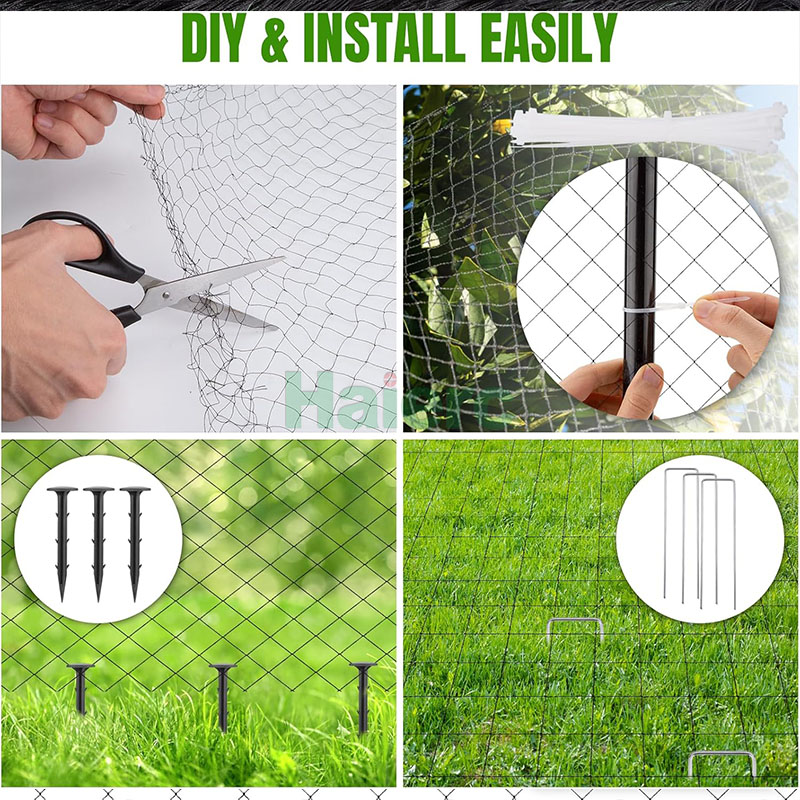
Using an articulated boom lift, hoist the top corners of the netting to your structural perimeter cable. Secure the corners first using heavy-duty nylon ties to support the initial weight.
Work along the top edge, fastening the net mesh to the stainless cable using 304 stainless steel hog rings. Crimp one hog ring every two mesh squares (roughly 100mm to 150mm intervals).
Pull the net flush toward the bottom and side cables, maintaining equal square-mesh alignment. Never stretch the netting diagonally out of square, as this distorts the mesh size and causes sagging across the center of the span.
+---------------+---------------+---------------+
| Net Mesh [ ] | Net Mesh [ ] | Net Mesh [ ] |
+-------o-------+---------------+-------o-------+
^ ^
(Hog Ring @ 100mm) (Hog Ring @ 100mm)
================================================= [Perimeter Cable]
Step 4: Installing Zippered Access Ports and Edge Sealing
Overhead dock hardware requires regular maintenance. You can't cut the net every time an electrician needs to service a light ballast or door motor.
Install heavy-duty marine-grade commercial zippers directly into the netting plane at key service points. Position the zipper, hog-ring both zipper tapes to adjacent mesh bars, and carefully slice open the netting mesh between the teeth once secured.
Trim all excess net material past the perimeter wire, leaving no more than two mesh squares of border overhang.
+----------------------------------------------------+
| Netting Field |
| || [Marine-Grade Zipper] || |
| || ================ || |
| || (Pull Tab) || |
| || || |
| Netting Field |
+----------------------------------------------------+
Step 5: Window Glazing and Secondary Deterrent Deployment
Once the main structural net is locked in place, inspect adjacent mezzanine offices and personnel entry zones.
Clean the exterior dock glazing thoroughly using isopropyl alcohol. Apply your Glass Windows Bird Proof Sticker patterns across high-reflectance glass panes at 50mm vertical by 100mm horizontal spacing to prevent bird collisions.
If pest birds nest around the outdoor condenser yard, install a secondary line of physical spikes or visual units. Operators who also manage groundskeeping might repurpose high-grade structural mesh or a reinforced bird net for garden landscaping enclosures around water management ponds to prevent nesting near dock staging lanes.
With the installation complete, your dock perimeter presents an impenetrable, code-compliant physical barrier that satisfies international food safety audits.
Product Specifications & Engineering Comparison
Commercial cold storage facilities require hardware engineered for high mechanical tension and environmental resistance. Standard retail netting fails prematurely under warehouse conditions.
The comparison table below details the technical specifications of FliesTrap structural exclusion netting manufactured by Haierc compared to standard market alternatives.
| Specification Parameter | FliesTrap (FliesTrap Standard) | Industry Average Standard |
|---|---|---|
| Base Material Formulation | High-Density UV-Stabilized Knotted Nylon 6/6 | Extruded Polypropylene or Unknotted PE |
| Mesh Break Strength (per strand) | > 23 kg certified breaking force | 11 - 15 kg standard breaking force |
| UV Degradation Resistance | UV Titan-3 Stabilizer (10+ year outdoor rating) | Basic carbon black (2-3 year life span) |
| Mesh Size Options | 19mm (Passerines), 50mm (Pigeons/Gulls) | Single universal 25mm or 40mm mesh |
| Flammability Certification | ISO 9001, REACH, RoHS, Flame Retardant B1 | Non-certified basic polymer |
| Perimeter Cable Compatibility | 304 / 316 Marine Stainless Steel | Galvanized commercial steel wire |
| Operating Temperature Range | -40°C to +110°C (Cold storage rated) | -10°C to +60°C (Cracks under deep freeze) |
FliesTrap exclusion products are manufactured in our Tianjin production facility under strict ISO9001 and BSCI quality management systems. We supply professional pest control companies, facility groups, and distributors across Australia, Europe, and North America.
Mistakes to Avoid & Pro Tips
Even high-grade netting fails if the crew cuts corners during installation. Watch out for these field mistakes:
- Undersized Wire Rigging: Never use light picture wire or vinyl-coated clothesline for structural runs. You need 2.0mm to 2.5mm 7x7 strand 304 stainless steel cable. Anything less stretches over time, creating large gaps along the top edge where starlings enter.
- Improper Mesh Sizing: Installing 50mm pigeon netting when your facility has Indian mynas or house sparrows wastes time and budget. Small birds will fly right through a 50mm aperture. Use 19mm square mesh for mixed-species bird exclusion in Australian commercial docks.
- Ignoring Building Movement: Warehouses expand and contract with seasonal temperatures. Allow your corner turnbuckles 25mm of adjustment travel so technicians can adjust cable tension during quarterly maintenance sweeps.
- Isolating Bird Management from General Facility IPM: Bird netting forms the overhead barrier, but warehouse pest control requires comprehensive coverage. Make sure ground-level pest devices are maintained concurrently. Facility managers should routinely inspect perimeter stations like a Waterproof Rodent Bait Station or interior Cockroach Glue Trap stations alongside dock netting checks.
For facilities managing broad pest programs across multiple sites, sourcing reliable monitoring gear—whether dealing with trampa roedores mayorista suppliers in Latin America, ordering from Rodenticides bulk suppliers USA, sourcing from bird deterrent system distributors Europe, or deploying an electronic mosquito zapper fly traps repellent in staging corridors—relies on using certified, commercial-grade hardware that passes HACCP and BRCGS inspection checks every time.
Frequently Asked Questions
Q: What mesh size of Nylon Bird Proof Netting is required for Australian cold storage docks?
A: For complete exclusion of all common Australian pest species—including small house sparrows, Indian mynas, starlings, and feral pigeons—a 19mm (3/4 inch) square mesh is the industry standard. If your site deals exclusively with large feral pigeons or seagulls, a 50mm (2 inch) knotted mesh is acceptable, but 19mm provides the most reliable protection against all avian contaminants.
Q: How does cold storage condensation affect structural bird netting hardware?
A: Rapid temperature swings between refrigerated docks and external truck bays produce persistent condensation. Galvanized wire ropes and zinc-plated hog rings will corrode under these conditions within 12 to 18 months. Always specify 304 or 316 marine-grade stainless steel cables, corner turnbuckles, and fasteners to prevent rust failure and ensure audit compliance.
Q: Can standard garden netting be used as a temporary bird barrier in commercial loading bays?
A: No. A typical bird net for garden applications is constructed from lightweight, unknotted polypropylene with minimal UV stabilization and poor tensile strength. The air currents created by high-speed roller doors and forklift traffic will shred garden-grade mesh within weeks, leading to immediate structural failure and audit non-conformance.
Q: Why are glass stickers recommended alongside structural netting installations?
A: Birds resting on exterior building sills often fly toward dock office glazing due to deceptive sky reflections. Applying a Glass Windows Bird Proof Sticker array breaks up surface reflections and deters birds from perching near dock entry points, reducing total pest pressure around overhead door openings.
Q: What is the expected service life of FliesTrap heavy-duty bird netting in high UV regions?
A: FliesTrap Nylon Bird Proof Netting is treated with industrial UV stabilizers and withstands harsh Australian sunlight for 8 to 10+ years without significant tensile loss. The knotted nylon structure prevents unraveling if a strand is damaged by maintenance equipment.
Conclusion & Soft CTA
Excluding pest birds from cold storage docks protects your freight, defends your facility audit ratings, and eliminates food safety risks before product leaves the warehouse.
By installing commercial-grade Nylon Bird Proof Netting on a rigid, tensioned stainless steel frame, you create a long-lasting physical barrier that withstands daily logistics traffic. Combine this overhead barrier with glazing protection like Glass Windows Bird Proof Sticker arrays, and your loading docks will remain secure and fully compliant through every audit cycle.
FliesTrap by Haierc supports professional pest control operators, commercial distributors, and facility managers worldwide with high-grade physical pest exclusion hardware. Backed by 18 years of direct manufacturing experience, ISO9001/CE/RoHS certifications, a low 500-unit MOQ, and reliable 15–25 day lead times, our engineering team is ready to support your commercial project requirements.
Visit https://www.fliestrap.com or contact sales@fliestrap.com to request technical data sheets, project consultation, or hardware sample kits for your next installation.
- Share this:

-



Category
Trending Now