




 Bird & Pigeon Pest Control
 MOUSE & RAT Pest Control
 Fly Pest Control
 Cockroach Pest Control
 Mosquito Pest Control
 Mole Pest Control
 Wasp Pest Control
 Moth Pest Control
 Bed Bug & Flea Pest Control
 Ant & Termites Pest Control
 Spider Pest Control
 Other Insect Pest Control
 Snake Pest Control
 Snail & Slug Pest Control
 Wildlife Pest Control
 Garden Products
 Virus Control
 Smart AI Trap
 Insecticides


Industry News
Which Rat Snap Trap Works Best for Commercial Food Facilities? | FliesTrap
 By
2026-09-23
read
By
2026-09-23
read

.jpg)
Introduction — Scenario Pain Point
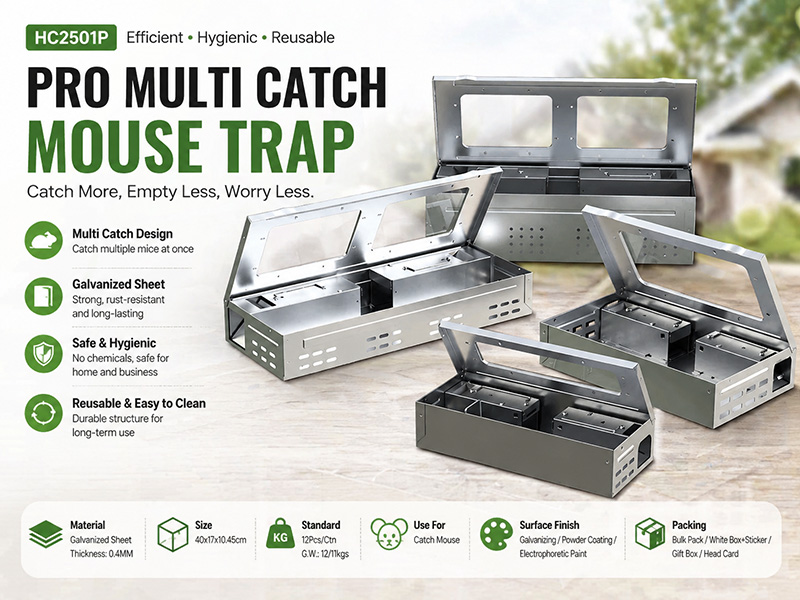
Rodents shut operations down. A single roof rat gnawing on dry ingredient packaging inside an organic milling plant will trigger an automatic audit failure under BRCGS and FDA FSMA 2026 standards. Chemical rodenticides inside food production zones aren't an option anymore. Secondary poisoning risks, dead animals rotting inside wall voids, and strict customer compliance rules mean mechanical trapping is the standard defense. Facility managers and pest management professionals (PMPs) face an ongoing headache: traps that misfire, trigger plates that get stripped of bait without snapping, or fragile hardware that cracks during routine washdowns.
Choosing the right Rat Snap Trap determines whether a commercial facility passes its third-party audit or spends tens of thousands in corrective action reports. Field techs know how infuriating it is to check fifty traps along an interior perimeter and find four tripped with zero catch. Rats learn fast. When a trap strikes too slow, the rodent escapes, grows trap-shy, and educates the rest of the mischief. We've spent 18 years engineering mechanical pest control equipment at Haierc, and the differences between a cheap consumer trap and a commercial-grade mechanical device come down to kinetic strike energy, trigger tension, and material durability.
+-------------------------------------------------------------+
| COMMERCIAL FACILITY INTERIOR IPM MONITORING PROTOCOL |
+-------------------------------------------------------------+
|
[ Zone 1: Exterior Perimeter / Loading Docks ]
|
+------------------+------------------+
| |
[ Tamper-Proof Stations ] [ Bird & Insect Barriers ]
- Mini Bait Station - Pigeon Deterrent Spikes
- Mechanical Rat Snap Trap - Plastic Bird Net
| |
+------------------+------------------+
|
[ Zone 2: Interior Buffer / Warehousing ]
|
- Heavy-Duty Rat Snap Trap (High-impact ABS / 304 SS spring)
- ECO-Friendly Insect Glue Trap
- Runways along perimeter walls every 20-30 ft
|
[ Zone 3: Sensitive Food Prep / Cleanrooms ]
|
- Enclosed Inspection Snap Traps (Zero chemical bait)
- Traceable plastic hardware + Washdown-safe components
Root Cause: Why Commercial Rodent Invasions Defeat Standard Traps
Commercial facilities provide rodents with three things: predictable heat, structural harborages, and abundant moisture. In states like California, Texas, and Georgia, seasonal shifts drive Norway rats and roof rats indoors as outdoor food supplies dwindle in late autumn. Roof rats exploit overhead conduit runs, utility penetrations, and architectural gaps around high-bay doors. Norway rats exploit floor drains, expansion joints, and pallet staging zones.
Standard consumer traps fail in these environments for several technical reasons:
- Trigger Sensitivity Degradation: Traditional wood-based traps absorb ambient moisture during facility sanitation shifts. The wood swells, the staple holding the spring loosens, and the trip wire loses its calibrated catch angle.
- Insufficient Strike Force: A heavy adult Norway rat can weigh upwards of 500 grams. Consumer traps equipped with low-tensile wire springs often deliver a non-lethal blow, allowing the rodent to drag the trap into equipment machinery.
- Bait Stripping: Liquid or paste attractants placed on narrow metal pedals get licked clean by cautious juveniles without exerting the downward pressure required to drop the sear.
- Harsh Sanitization Chemicals: Quaternary ammonium compounds, chlorine sanitizers, and high-pressure steam degrade cheap plastics, causing brittle structural failure within weeks.
Industry survey data published by PCT Online and technical guidelines from the BPCA emphasize that mechanical traps inside commercial accounts must withstand repeated mechanical impacts and chemical sanitization without losing spring tension. When you run a 200,000-square-foot distribution center, trap failure isn't just an annoyance. It is a severe supply chain vulnerability.
Comprehensive Product Comparison: Mechanical Traps & Perimeter Defenses
Evaluating hardware for commercial accounts requires comparing build material, trigger mechanisms, service speed, and compliance fit. Below is an engineering breakdown of common trap architectures used across commercial food, beverage, and warehousing facilities.
| Hardware Category | FliesTrap Commercial Standard | Traditional Wooden Traps | Generic Plastic Import Traps |
|---|---|---|---|
| Primary Construction Material | High-impact UV-stabilized ABS / 304 Stainless Steel Spring | Kiln-dried pine base / Carbon steel spring wire | Recycled polypropylene / Low-grade zinc wire |
| Strike Force (Torque Rating) | 1.85 Nm to 2.10 Nm (instant humane dispatch) | 1.20 Nm (diminishes after 3-5 snaps) | 0.95 Nm to 1.30 Nm (inconsistent strike rate) |
| Trigger Mechanism | High-sensitivity expanded bait cup with serrated trip plate | Flat stamped metal latch or basic plastic bait pedal | Narrow plastic tongue with high friction threshold |
| Sanitation & Washdown Rating | IP65 compatible; impervious to caustic foaming agents | Fails washdown; absorbs water, mold, and odor | Prone to stress cracking from chlorinated sanitizers |
| Service & Reset Time | Single-motion foot/hand lever reset (approx. 4 seconds) | Manual wire arm bar setting (approx. 12-15 seconds) | Two-hand overhead latch setting (approx. 8 seconds) |
| Station Enclosure Compatibility | Direct-fit mounting lugs for secure station anchoring | Loose fit; shifts inside stations during rodent approach | Varies; frequently blocks access tunnels |
Detailed Pros and Cons Analysis
1. Heavy-Duty High-Impact Rat Snap Trap
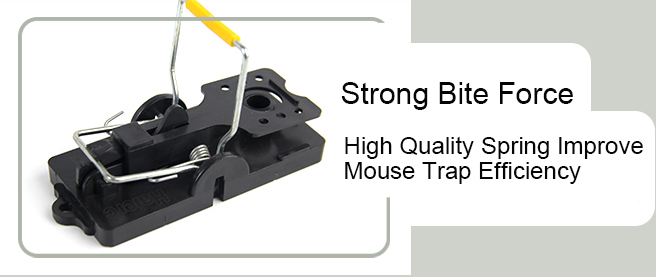
- Pros: Highly consistent kinetic energy across thousands of cycles. The oversized bait cup forces the rodent to commit full jaw pressure directly above the trigger fulcrum. Non-absorbent ABS plastic allows technicians to pressure-wash and sanitize the hardware after every catch, fully aligning with HACCP and BRCGS requirements. Quick-set bar mechanisms minimize technician pinch injuries during routine maintenance runs.
- Cons: Higher initial procurement cost per unit compared to basic wooden traps. Requires proper anchoring or tethering in high-traffic zones to prevent trap movement by curious non-target personnel.
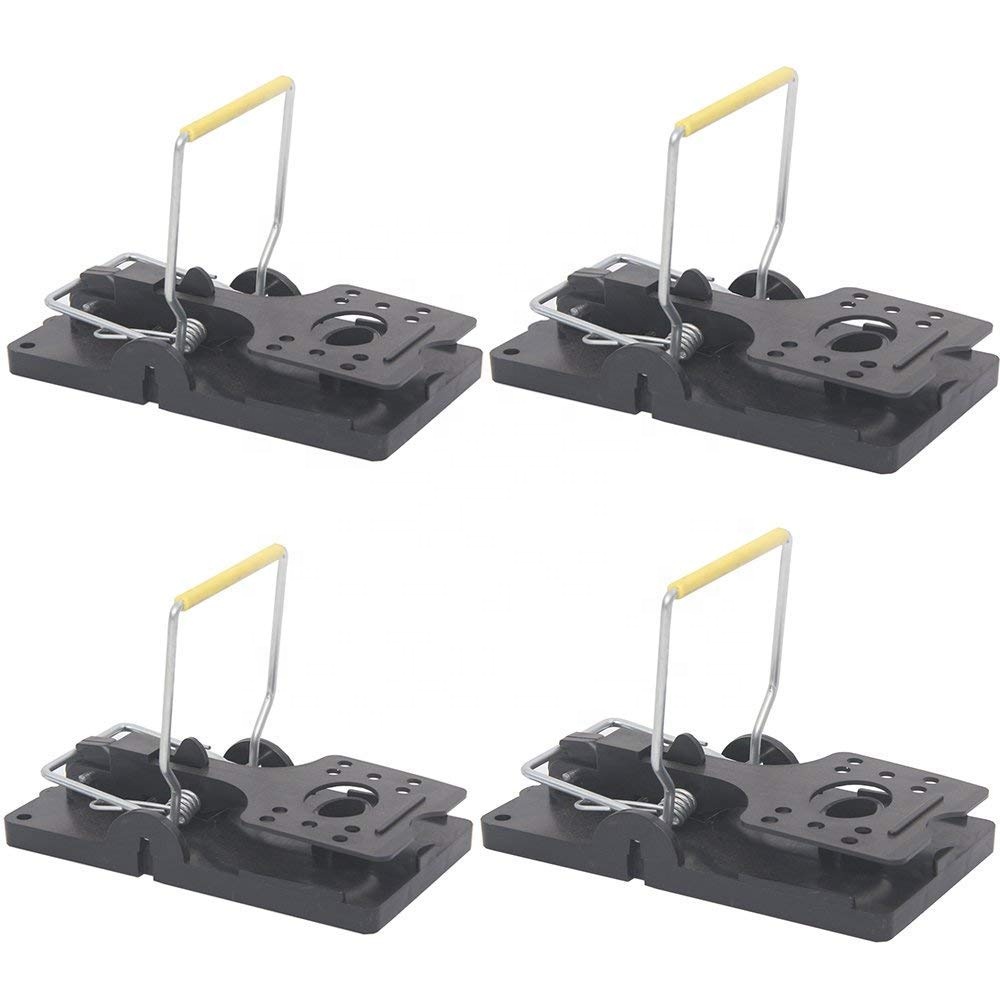
2. Traditional Wooden Snap Mouse Trap and Rat Trap
- Pros: Lowest initial purchase price. Useful as disposable hardware in heavy bio-hazard situations where technicians prefer tossing the entire unit rather than servicing it.
- Cons: Zero sanitation tolerance. Wood absorbs blood, urine, and sanitizing chemicals, instantly creating an audit non-conformance in food-grade environments. High trigger failure rate after moisture exposure.
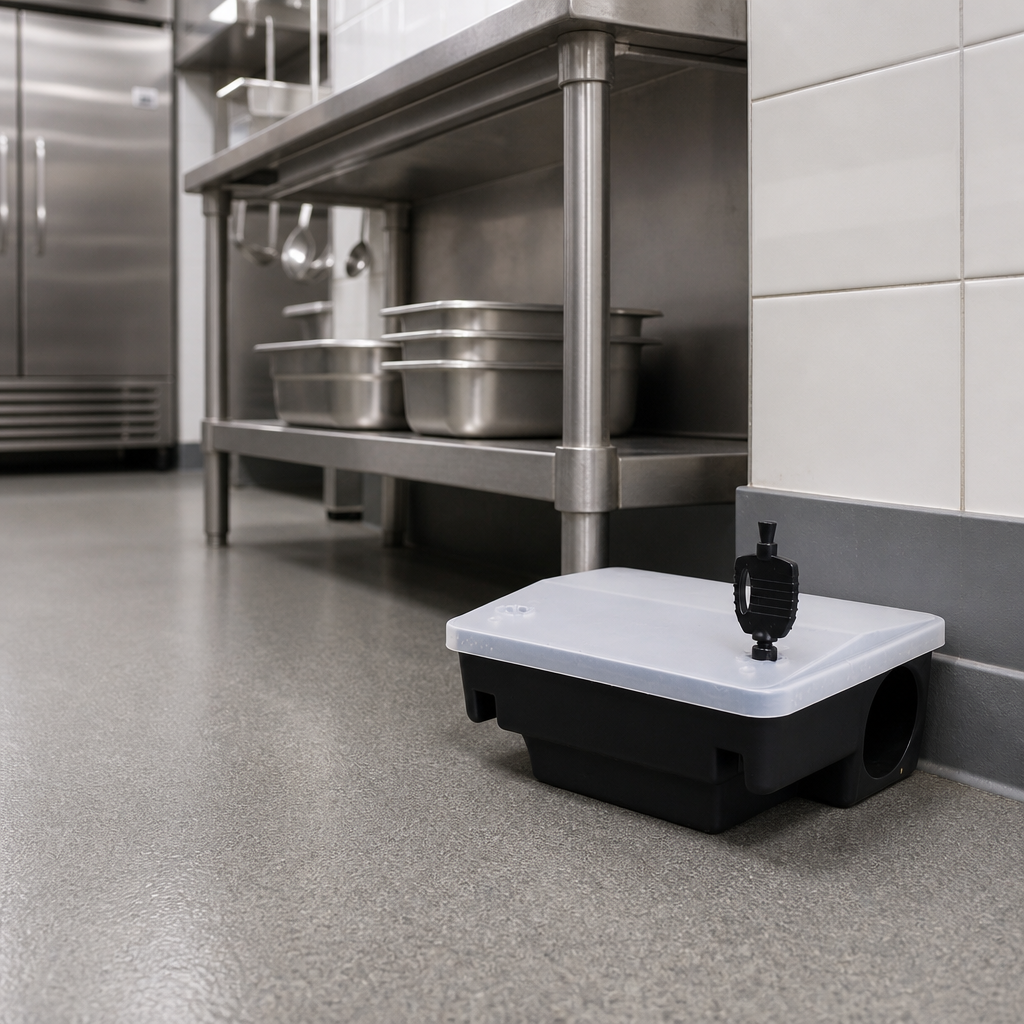
3. Integrated Tamper-Resistant Mini Bait Station with Snap Trap Insert
- Pros: Keeps the strike bar shielded from employee tampering, forklifts, and dust accumulation. Allows compliant mechanical trapping in common corridors and external loading dock aprons where open snap traps cannot be placed safely.
- Cons: Larger footprint along high-traffic forklift aisles. Requires key access, which slightly increases inspection cycle times during facility audits.
Applicable Facility Scenarios and Deployment Architecture
Pest control inside industrial environments isn't one-size-fits-all. Different production rooms present distinct operational risks that dictate which hardware configuration works.
+-------------------------------------------------------------+
| FACILITY COMPLIANCE & HARDWARE MATRIX |
+-------------------------------------------------------------+
| Zone | Recommended Hardware Setup |
|-----------------------|-------------------------------------|
| Loading Docks & | Mini Bait Station + |
| Roll-Up Doors | Heavy-Duty Rat Snap Trap |
| | Pigeon Deterrent Spikes |
|-----------------------|-------------------------------------|
| Dry Storage & | High-Impact Rat Snap Trap |
| Pallet Racking | ECO-Friendly Insect Glue Trap |
|-----------------------|-------------------------------------|
| Clean Processing & | Enclosed Non-Toxic Catch Stations |
| Packaging Lines | Traceable Mechanical Hardware |
|-----------------------|-------------------------------------|
| Glass Entrances & | Glass Windows Bird Proof Sticker |
| Office Perimeters | Discreet Mechanical Monitors |
+-------------------------------------------------------------+
1. Food Processing & Packaging Rooms
In primary food manufacturing zones, open baits are strictly forbidden by CEPA and NPMA guidelines. The standard deployment calls for high-impact ABS Rat Snap Trap units paired with food-grade attractants like synthetic peanut butter or oatmeal matrix gels. Traps must be placed flush against wall-floor junctions, situated every 15 to 25 linear feet along runways.
2. Cross-Dock Logistics Warehouses
Loading dock bays present constant pest incursions due to open overhead doors. Here, rodent control overlaps with bird and insect management. While technicians secure loading dock doors with high-torque Rat Snap Trap banks locked inside tamper-resistant enclosures, they often resolve exterior avian pressures on overhead dock canopies by installing Pigeon Deterrent Spikes or deploying a Scare Birds Plastic Owl Decoy near roof overhangs. If high window spans near administrative offices suffer bird strikes or roosting, adding a Glass Windows Bird Proof Sticker maintains aesthetic integrity while preventing secondary pest harborage. A complete IPM barrier protects all facility entry vectors.
3. Agricultural Feed & Bulk Ingredient Storage
In feed mills and grain terminals, rodent pressure can be overwhelming. Standard snap traps should be tethered to wall studs or structural steel using galvanized cables. For supplementary bird exclusion across rafters, facilities frequently integrate Plastic Bird Net systems and high-frequency hardware like the Uitrasonic Bird Repeller Machine, allowing mechanical traps on the floor to work without interference from bird droppings or nesting debris falling into trigger plates.
Step-by-Step How to Implement a Compliant Mechanical Trapping Program
Setting up an industrial rodent line takes methodical execution. Follow this battle-tested protocol to ensure high catch rates and zero regulatory pushback during your next audit.
+------------------+ +------------------+ +------------------+ +------------------+
| 1. MAP RUNWAYS | --> | 2. PRE-BAIT | --> | 3. SET & CALIBRATE| --> | 4. AUDIT & LOG |
| Inspect rub marks| | Offer food with | | Back-to-back | | Inspect daily |
| & droppings along| | triggers unarmed | | perpendicular | | Log via barcode/ |
| perimeter walls | | for 48 hours | | wall placement | | digital system |
+------------------+ +------------------+ +------------------+ +------------------+
Step 1: Runway Identification and Site Mapping
Never place traps randomly in the middle of a floor. Rats are neophobic and travel along structural edges using their vibrissae to navigate. Look for dark rub marks (sebum trails) along walls, baseboards, and pipe chases. Mark every proposed trap location on your facility CAD schematic with a dedicated station number for full audit traceability.
Step 2: Pre-Baiting the Target Population
Rats avoid new objects introduced to their territory. For the first 48 hours, place the Rat Snap Trap loaded with attractant directly along the runway, but leave the spring arm uncocked. Let the rodents feed freely without triggering the bar. Once bait consumption is confirmed across multiple stations, the rodents have accepted the hardware as a safe feeding source.
Step 3: Armed Calibration and Tactical Orientation
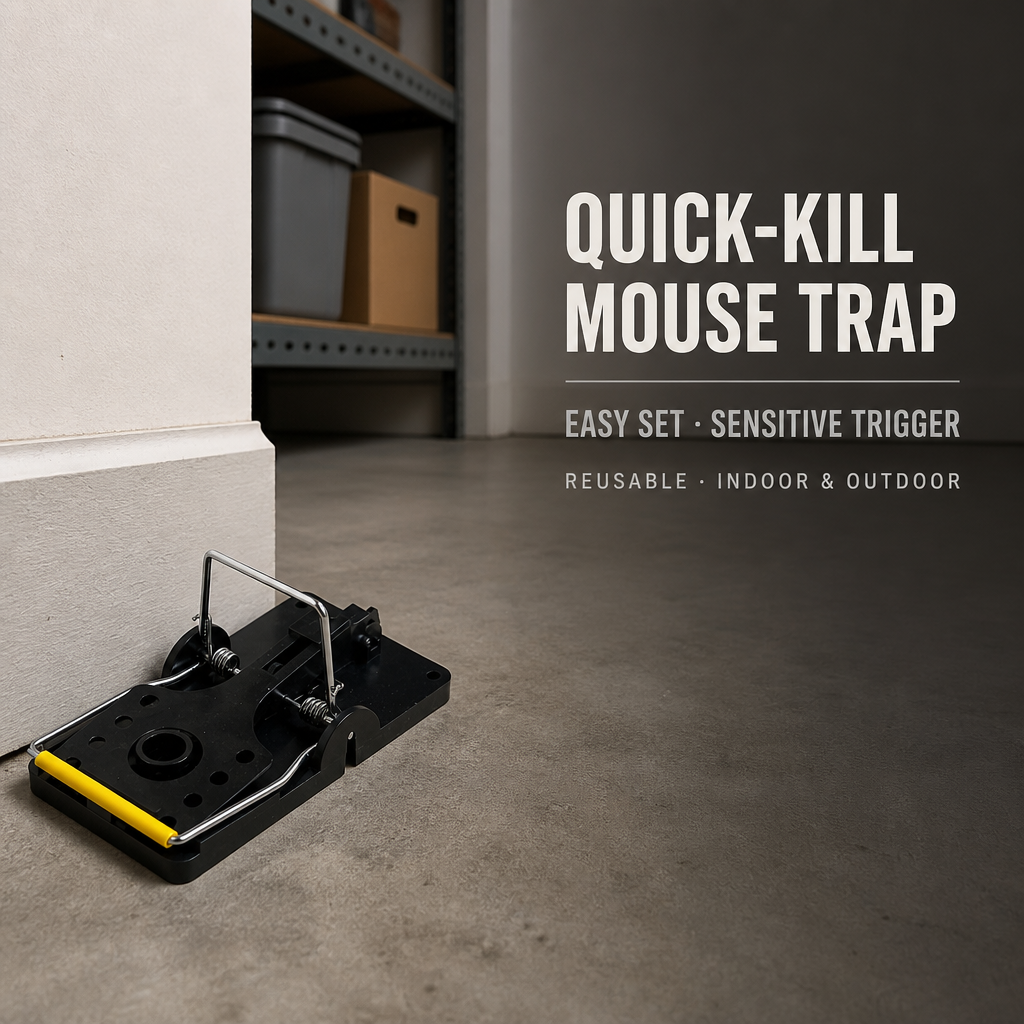
Arm the traps. Always position the trigger cup facing the wall, placed perpendicular to the baseboard. When trapping along narrow conduit racks or high-pressure runways, place traps in pairs, back-to-back, with triggers facing outward. When a running rat attempts to leap over the first trap, it lands squarely on the trigger pan of the second.
Step 4: Daily Inspection and Digital Logging
Under standard pest management protocols, inspect interior mechanical traps every 24 to 48 hours. Remove dispatched rodents immediately in sealed disposal bags to prevent fly breeding and secondary dermestid beetle infestations. Record every catch, misfire, or missing bait event in your facility pest log to identify population trends.
Step 5: Post-Catch Sanitization and Resetting
Do not discard a plastic snap trap after a single catch. Wash the trap in hot water and a mild non-scented detergent to remove blood spots, then re-bait and reset it. Rodent pheromones left on the plastic base often attract subsequent rats, provided the trap remains structurally clean and free of decaying tissue.
Mistakes to Avoid & Pro Tips
Commercial operators often make small setup errors that ruin an otherwise solid IPM plan. Avoid these critical mistakes:
- Over-Baiting the Trigger Pan: Piling high heaps of attractant onto the trigger plate allows rodents to nibble from the edges without applying downward force. Use an amount no larger than a dime, pressing it firmly into the bait well.
- Using Strongly Scented Cleaners on Hardware: Industrial pine or citrus cleaners leave chemical residues that rats detect instantly. Clean traps only with fragrance-free enzymatic detergents or hot water rinses.
- Ignoring Perimeter Bird and Insect Pressure: A facility focused solely on floor rodents can fail audits due to bird roosting on exterior ledges. Working with a reliable deterrent spike wholesale supplier UK or US distributor to source high-grade 304 SS bird spikes ensures your building exterior matches the compliance standard of your interior floor lines.
- Failing to Secure the Trap: Large rats can kick or drag a sprung trap several feet before expiring. In commercial accounts, anchor traps to the floor using removable silicone adhesive pads or cable-tie them to interior pipe stands.
- Under-Trapping the Area: One trap every 50 feet is useless during an active infestation. Trapping is a numbers game. Cluster six to ten traps within a 20-foot radius of active droppings to knock down the population rapidly within 72 hours.
Selection Advice: Choosing the Right Trapping Hardware for Procurement
When procuring rodent control hardware for commercial facilities, procurement officers and PCO business owners must balance unit durability, labor efficiency, and regulatory compliance.
[ EVALUATING HARDWARE ]
|
+-----------------------+-----------------------+
| |
[ Regulatory / HACCP ] [ Operations & Labor ]
| |
- Washable non-porous ABS - 1-motion arming lever
- Metal-detectable plastics - Dual-catch anchoring
- Zero chemical bait drift - Low unit replacement rate
| |
+-----------------------+-----------------------+
|
[ Total Cost of Ownership ]
- 18-month service life
- Reduced callback labor
- Audit compliance guarantee
- Calculate Total Cost of Ownership (TCO): A cheap trap that lasts one month and requires ten minutes to clear and reset costs significantly more in technician labor than a heavy-duty unit built for a two-year service life.
- Prioritize Single-Motion Setting: Traps requiring complex two-handed setting increase the risk of technician fingertip injuries and slow down route efficiency. Look for foot-set or one-click hand-lever mechanisms.
- Audit Compliance Verification: Ensure all plastic components are manufactured from virgin or high-grade UV-stabilized resins that won't flake, crack, or leach into food-grade operational areas. If your plant runs optical sorting or metal detection, inquire about metal-detectable polymers.
- Partner with Experienced Manufacturers: Choose suppliers with direct manufacturing capability, extensive tooling experience, and comprehensive quality control certifications like ISO9001 and CE.
Frequently Asked Questions
Q: Why are plastic rat snap traps preferred over wooden snap traps in food processing facilities?
A: Plastic rat snap traps made from non-porous ABS polymers do not absorb moisture, blood, or bacteria. They can be sanitized with hot water and commercial disinfectants to comply with FDA FSMA and HACCP hygiene standards, whereas wooden traps absorb organic matter and fail food safety audits.
Q: What is the optimal distance between snap traps along an interior commercial warehouse wall?
A: For routine preventative monitoring, place traps every 20 to 30 feet along perimeter walls. During an active rodent infestation, compress trap spacing to 10 to 15 feet in target harborages, placing units in pairs back-to-back for maximum capture probability.
Q: Can commercial rat snap traps be used safely in facilities with non-target wildlife or pets?
A: Yes, but they must be secured inside tamper-resistant stations such as a lockable Mini Bait Station. Enclosing the snap trap prevents children, pets, and non-target wildlife from contacting the mechanical strike bar while allowing rodents to enter through standard entry ports.
Q: How much strike force is required for a commercial rat trap to ensure a humane kill?
A: Professional commercial rat traps require a spring torque rating between 1.8 Nm and 2.1 Nm. This delivers immediate, humane dispatch to large adult Norway rats (up to 500g) and prevents injured rodents from crawling into inaccessible facility walls or equipment.
Q: How does mechanical trapping fit into 2026 FDA FSMA food safety compliance?
A: The FDA FSMA 2026 regulations emphasize hazard prevention and the elimination of chemical contamination risks in food zones. Non-toxic mechanical capture devices, such as commercial rat snap traps and physical insect monitors, provide zero-chemical rodent management with verifiable data logs required by third-party auditors.
Summary & Next Steps
Mechanical rodent management remains the cornerstone of modern commercial pest control. As auditing standards tighten globally, relying on subpar wooden hardware or weak consumer traps creates unnecessary operational risk. Deploying industrial-grade ABS snap traps with calibrated strike springs protects your facility from product adulteration, audit non-conformances, and costly brand damage. Match the hardware to your specific operational zones, calibrate your trigger sensitivity, pre-bait when dealing with neophobic populations, and maintain rigorous inspection logs.
FliesTrap by Haierc brings over 18 years of specialized manufacturing experience to professional PCOs and commercial distributors across the United States, UK, Germany, and Australia. Our factory engineers high-performance physical pest control hardware, from commercial-grade rodent traps to structural bird deterrents and insect monitoring systems.
Need to upgrade your facility's physical pest defense line or request bulk technical spec sheets? Contact our commercial engineering team at sales@fliestrap.com or explore our complete catalog at https://www.fliestrap.com to request product samples for your technical trial.
- Share this:

-



Category
Trending Now