




 Bird & Pigeon Pest Control
 MOUSE & RAT Pest Control
 Fly Pest Control
 Cockroach Pest Control
 Mosquito Pest Control
 Mole Pest Control
 Wasp Pest Control
 Moth Pest Control
 Bed Bug & Flea Pest Control
 Ant & Termites Pest Control
 Spider Pest Control
 Other Insect Pest Control
 Snake Pest Control
 Snail & Slug Pest Control
 Wildlife Pest Control
 Garden Products
 Virus Control
 Smart AI Trap
 Insecticides


Industry News
How to Deploy a Pro Multi Catch Mousetrap in Food Facilities | FliesTrap
 By
2026-09-22
read
By
2026-09-22
read

.jpg)
Introduction — Scenario Pain Point
Mice don't announce their arrival. You walk into a chilled warehouse or dry-goods staging area at 06:00, flip the high bays on, and spot fresh droppings along the skirting board.
In a UK food processing plant, that single sighting threatens your BRCGS audit score. You can't just throw toxic rodenticide blocks across an active food line. UK Campaign for Responsible Rodenticide Use (CRRU) guidelines and environmental health officers strictly limit open toxic baiting inside production zones.
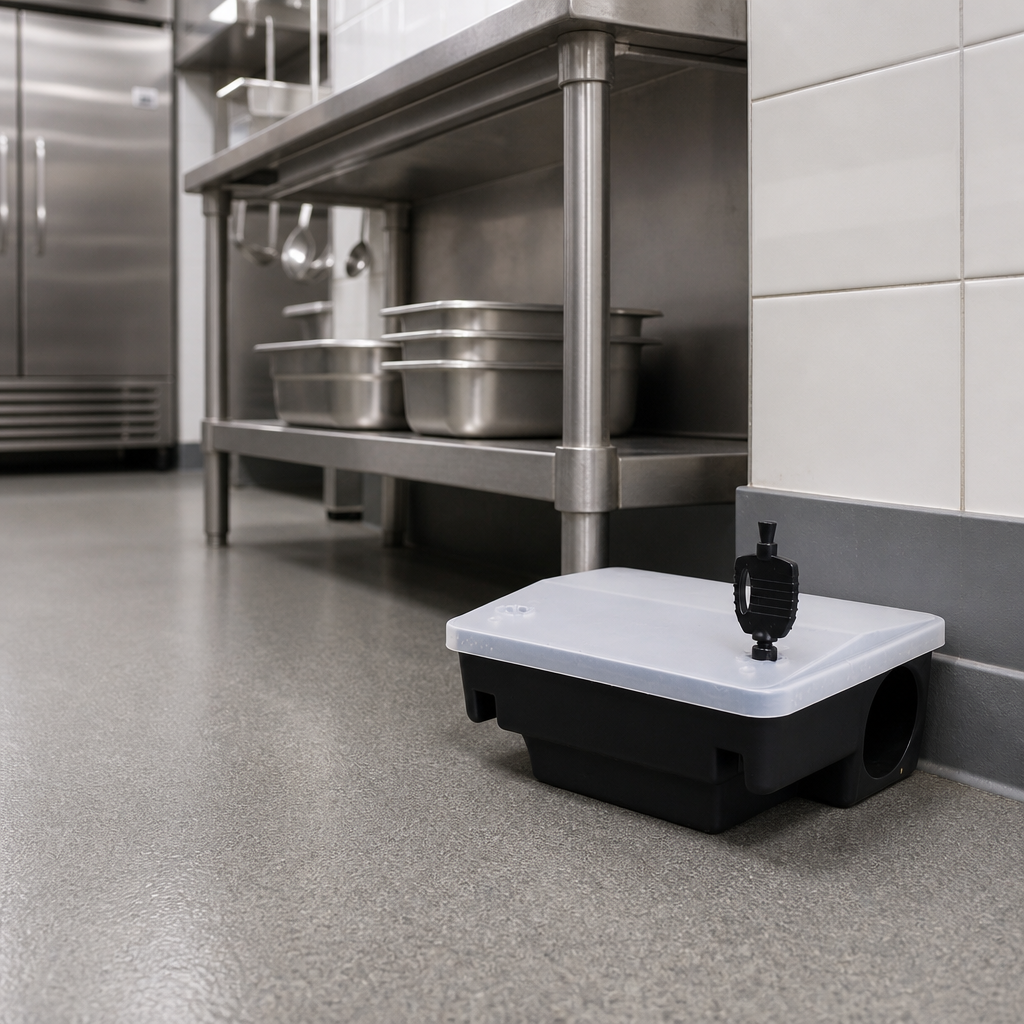
That is why professional pest technicians rely on physical capture hardware. Deploying a Pro Multi Catch Mousetrap gives your facility continuous, non-toxic protection without risking chemical drift or product contamination. These heavy-gauge galvanised units capture up to 10 to 15 mice in a single service cycle through a mechanical one-way entry ramp.
Rodents enter out of curiosity. They can't find their way back out.
Achieving consistent results with mechanical hardware requires precise field technique. A misplaced trap is just an expensive doorstop. This comprehensive guide walks through the root causes of indoor rodent runs, the mechanical setup required for zero-failure capture, and the maintenance routines that keep your facility compliant with strict British pest control standards.
Why Rodent Ingress Surges in UK Commercial Sites
Pest pressure inside UK commercial facilities isn't random. It follows distinct operational and seasonal patterns.
Every autumn, when wet weather sets in across Britain and ambient temperatures drop below 10°C, field mice (Apodemus sylvaticus) and house mice (Mus musculus) abandon agricultural verges and head straight for heated building foundations. They need warmth, harborage, and carbohydrates.
Mice are thigmotactic. They navigate almost entirely by touch, pressing their whiskers against vertical surfaces as they scurry along walls, pipes, and racking legs. When dock levelers have worn brush strips or pedestrian fire doors sit slightly out of square, mice squeeze through gaps as small as 6 mm.
External environmental pressures amplify this issue. When a commercial site has unmanaged loading docks or open waste yards, rodents and birds congregate together. Pest control technicians often find that a bird repellent systems buyer UK searching for bird exclusion hardware is dealing with rodent runs along the exact same exterior perimeter walls. Bird droppings and spilled seed from roosting flocks create a rich food source that draws rodents straight to your facility's threshold.
Inside the facility, high pallet turnover creates temporary blind spots. Forklift activity creates vibration, pushing rodents away from open floor areas and directly into wall-floor junctions, false ceilings, and motor housings. If your mechanical traps aren't sitting squarely in these precise natural travel paths, rodents will simply bypass your control points completely.
Step-by-Step Guide: Deploying and Servicing Multi-Catch Traps
Getting reliable results from mechanical traps demands strict adherence to placement physics and rodent biology. Follow this practical five-step process on your service rounds.
+-------------------------------------------------------------------+
| MULTI-CATCH TRAP FIELD DEPLOYMENT |
| |
| [Step 1: Map Runway] --> [Step 2: Flush Placement] |
| | | |
| v v |
| [Step 3: Internal Lure] --> [Step 4: Inspection] |
| | |
| v |
| [Step 5: Wash & Reset] |
+-------------------------------------------------------------------+
Step 1: Map Internal Runways and Entry Points
Start by conducting a thorough inspection with a high-lumen inspection torch. Look for oily smudge marks along baseboards, scattered spindle-shaped droppings, and gnawed packaging.
Focus on high-risk perimeter zones:
- Both sides of rapid-rise roller doors
- Behind refrigeration compressor units
- Along dry storage pallet racking perimeters
- Service pipe penetrations through drywall
Mark your trap locations on a facility layout CAD map. Space your units 6 to 10 meters apart in active zones, or every 12 to 15 meters for routine perimeter monitoring.
Step 2: Establish Direct Wall-Flush Orientation
Position the Pro Multi Catch Mousetrap flat against the vertical surface.
The entry holes must sit parallel to the wall so a running mouse encounters the entry tunnel naturally without altering its travel path. Never angle the trap outward. If the unit wobbles on uneven screed, shim the low corner. A trap that shifts under a rodent's weight will trigger an avoidance response.
CORRECT PLACEMENT:
+-------------------+
| Building Wall |
+-------------------+
[O] TRAP BODY [O] <-- Entry holes flush with wall runway
===================
Traffic Aisle
For exterior dock perimeters, combine your internal traps with heavy-duty exterior bait stations. Technicians working on full-site exclusion often install physical barriers simultaneously. They might hang a Catching Bird Net across open eaves or hang Metal Bird Scare Discs near loading bays, while placing internal traps right below the overhead doors to catch whatever slips past the perimeter.
Step 3: Insert Non-Toxic attractants and Monitoring Boards
Mechanical multi-catch traps rely on natural curiosity, but internal attractants drastically speed up initial entry.
Slide a low-profile sticky insert into the trap's central collection chamber. Pheromone glue traps placed inside the base catch smaller juveniles and capture any wandering beetles or stored product insects simultaneously.
For baiting, avoid grain-based lures if stored product moths are an audit concern. Instead, use non-allergenic synthetic food-grade attractants, peanut-free pastes, or a tiny smear of high-lipid chocolate spread placed behind the one-way balance ramp. Never place lure directly on the moving ramp itself, because dried lure can jam the delicate counterweight mechanism.
Step 4: Establish Service and Inspection Frequencies
How often should you inspect your traps? Under BPCA codes of practice, live-capture mechanical traps must be checked at least once every 24 hours when used without internal dispatch glue boards.
When paired with internal glue boards for rapid dispatch, weekly inspection is standard across low-risk zones. During an active infestation, step up your inspection cycle to every 48 hours. Record your findings on the service tag affixed to the trap lid or log the barcode scan into your facility's digital pest management portal.
Step 5: Clean, Sanitize, and Reset Mechanics
A dirty trap carries high rodent stress pheromones that can repel newcomers.
When a catch occurs:
- Remove the capture tray or replace the soiled glue board.
- Check the internal counter-balanced ramps. They must drop freely under their own weight.
- If grease, dust, or flour has accumulated on the pivot pins, blow the mechanism clean with dry compressed air or wash the unit in warm soapy water.
- Dry the trap thoroughly before redeployment to prevent rust on internal tension springs.
Technical Comparison: Pro Multi Catch Traps vs Traditional Devices
Selecting the right hardware for commercial facilities requires evaluating durability, catch capacity, and compliance requirements. Food plants cannot risk uncontained rodent remains or exposed snap springs near open packaging lines.
| Specification | FliesTrap Pro Standard | Industry Average Standard |
|---|---|---|
| Housing Material | 0.6 mm Heavy Galvanized Steel / UV-Stabilized PC Lid | 0.4 mm Thin Tinplate or Recycled Plastic |
| Entry Mechanism | Dual-sided counter-weighted gravity balance ramps | Single spring-loaded trip door |
| Simultaneous Catch Capacity | 10 to 15 mice per service cycle | 1 to 2 mice maximum |
| Inspection Method | Clear-view transparent viewing window on lid | Solid metal lid requiring physical opening |
| Compliance Suitability | BRCGS, IFS, FSMA non-toxic physical monitoring | Varies; exposed traps fail food safety audits |
| Corrosion Resistance | Tested to 120-hour salt spray standard | Prone to surface rust in wet washdown zones |
The Pro Multi Catch Mousetrap excels in high-traffic logistics hubs because it resets automatically after every capture. If three mice enter a building in the middle of the night, a standard snap trap stops working after catching the first one. The multi-catch unit keeps working until the entire family group is contained.
Hardware Integration in Full-Facility IPM
A complete Integrated Pest Management program doesn't rely on a single device form. Professional pest managers combine multiple mechanical tools to protect different operational zones.
In tight spaces under commercial kitchen equipment or narrow electrical risers, a slimline Plastic Mouse Tunnel offers compact runway trapping. Where severe rodent pressure requires instant electrical dispatch, an Electronic Mouse Trap placed along sub-floor cable trays gives clean, instant kills without exposed moving parts.
+------------------------------------------------------------------------+
| FACILITY PHYSICAL EXCLUSION MATRIX |
| |
| [EXTERIOR PERIMETER] [LOADING BAYS] [PRODUCTION ZONES] |
| - Heavy-Duty Bait Station - Bird Netting - Pro Multi Catch |
| - Bird Shock Tracker - Visual Bird Repeller Mousetrap |
| - púas antipájaros - Dock Brush Strips - Insect Light |
| distribuidor systems - Pheromone Boards |
+------------------------------------------------------------------------+
External pest pressures must be cut off before rodents breach the outer walls. High-risk exterior docks often require full exclusion hardware setups. When birds roost on external rooflines, their nests and droppings attract secondary insect pests and rodents.
Experienced operators frequently combine mechanical rodent traps with physical bird deterrents. Using an exterior Bird Scarecrow Fake Eagle Scare Birds alongside overhead Bird Net hardware keeps birds off structural beams, while ground-level rodent stations handle ground-level threats.
Whether your facility manager is ordering from a specialized bird repellent systems buyer UK channel or upgrading interior rodent monitoring devices, maintaining durable, non-toxic physical barriers across the entire facility envelope is essential for modern compliance.
Critical Mistakes to Avoid and Compliance Protocols
Even seasoned facility staff make preventable mistakes when installing mechanical rodent traps. Avoid these common traps:
- Placing Traps in Direct Forklift Runways: High-capacity warehouses see heavy vehicle traffic. Always tuck your traps inside racking upright protectors, behind guardrails, or under pallet stops to avoid crush damage.
- Over-Baiting with Perishable Food: Slapping half a sandwich inside a trap attracts flies and cockroaches, creating a secondary pest infestation. Stick to dry attractants or professional non-toxic gel lures.
- Ignoring Washdown Moisture: If your facility conducts high-pressure hot water washdowns nightly, standard metal traps will sit in standing puddles. Elevate traps slightly on mounting plates or lift them during washdown cycles to prevent standing water inside the trap bed.
- Failing BRCGS and FSMA 2026 Non-Toxic Directives: Auditors want to see strict physical separation between rodent control hardware and open food product zones. Ensure your traps are positioned along perimeter walls and low-risk transit corridors rather than directly above open conveyors.
Frequently Asked Questions
Q: How many mice can a Pro Multi Catch Mousetrap realistically hold at one time?
A: FliesTrap Pro Multi Catch Mousetrap units comfortably hold 10 to 15 mice per service cycle. The dual-entry counter-weighted ramps reset immediately after each entry, allowing multiple rodents to enter throughout the night without jamming.
Q: Can multi-catch mouse traps be used outdoors around loading bays?
A: While the heavy-gauge galvanized steel body resists corrosion, multi-catch traps perform best indoors or inside protected exterior loading dock enclosures. For fully exposed outdoor perimeters, house them inside a lockable, weather-resistant Bait Station to protect the internal ramp mechanism from rain and debris.
Q: What is the best bait to put inside a live multi-catch trap?
A: Use professional non-toxic attractant gels, peanut-free chocolate pastes, or pheromone glue traps. Avoid loose grain baits that can attract stored product insects or fall underneath the ramps and jam the counter-balance mechanism.
Q: How do you humanely dispatch or clear rodents from the multi-catch unit?
A: Facilities inserting an internal sticky board achieve rapid, contained dispatch upon entry. If using the unit as a live trap, transport the entire closed unit to a designated area and slide the inspection lid open to release or dispatch according to local BPCA animal welfare protocols.
Q: Do clear-lid multi-catch traps meet UK food hygiene audit standards?
A: Yes. The transparent UV-stabilized polycarbonate lid allows technicians to conduct rapid visual inspections without opening the trap. This prevents accidental escapes during audits and speeds up routine monitoring across large industrial facilities.
Conclusion & Soft CTA
Managing rodent pressures across UK commercial facilities requires dependable, chemical-free physical monitoring tools. By positioning your hardware flush against active wall runways, baiting with non-toxic attractants, and maintaining clean mechanical ramps, you protect your inventory while staying fully compliant with BRCGS and BPCA audit standards.
FliesTrap by Haierc provides over 18 years of specialized manufacturing experience in physical pest control hardware, producing durable multi-catch traps, glue monitoring boards, and perimeter exclusion systems.
Need technical specification sheets, customized OEM branding, or trial samples for your commercial distribution routes? Request product specifications and sample evaluation packs directly at https://www.fliestrap.com or reach our technical sales team at sales@fliestrap.com.
- Share this:

-



Category
Trending Now