




 Bird & Pigeon Pest Control
 MOUSE & RAT Pest Control
 Fly Pest Control
 Cockroach Pest Control
 Mosquito Pest Control
 Mole Pest Control
 Wasp Pest Control
 Moth Pest Control
 Bed Bug & Flea Pest Control
 Ant & Termites Pest Control
 Spider Pest Control
 Other Insect Pest Control
 Snake Pest Control
 Snail & Slug Pest Control
 Wildlife Pest Control
 Garden Products
 Virus Control
 Smart AI Trap
 Insecticides


.jpg)
Introduction — Scenario Pain Point
Rats don't wait. When an unexpected freeze hits a commercial distribution hub, rodent populations shift overnight from exterior landscaping directly toward perimeter dock doors and waste compaction bays. If your exterior defense line fails, you're looking at contaminated raw materials, expensive product holds, and failed third-party sanitation audits.
Food facilities across the United States face unprecedented scrutiny under updated FDA FSMA 2026 guidelines. Facilities can't simply scatter loose toxic blocks in corners and hope for the best. Modern regulatory frameworks require structured physical monitoring, tamper-resistant enclosures, and precise service logs.
Pest control operators (PCOs) and sanitation leads need durable hardware that stands up to heavy forklift traffic and harsh weather. Whether you manage tight interior storage racks using a compact Mini Bait Station or secure exterior dock lines with a heavy-duty Rat Bait Station with Snap Trap, your layout dictates your success. We've spent 18 years refining physical pest management hardware to bridge the gap between compliance demands and everyday field practicality. This guide walks you through setting up an audit-ready rodent defense grid that keeps facilities secure and technicians efficient.
Why Rodent Pressure Spikes in Commercial Facilities
Rodents follow heat, moisture, and pheromone trails. When seasonal transitions drop night temperatures, juvenile Norway rats and roof rats seek thermal breaks in building envelopes. A single warehouse door left propped open during evening freight intake can draw foraging rodents across a 50-foot apron in seconds.
Industry data published by NPMA and insights from PCT Online indicate that commercial food handling sites experience up to a 40% spike in interior rodent detections between September and November. Exterior conditions heavily influence interior pressure. If an adjacent retention pond or unsealed trash corral isn't secured, rodents will establish staging burrows right against the foundation.
[Exterior Perimeter] ──> [Structure Wall Line] ──> [Interior Dock Line] ──> [Sensitive Storage]
(Bait/Monitoring) (Snap Traps/Anchors) (Non-Toxic Grid) (Mini Stations)
Secondary pests compound the problem. Overflowing waste areas attract both rodents and pest birds like feral pigeons or gulls. When exterior areas are overwhelmed by avian waste and nesting debris, technicians often find rodent stations fouled or bypassed entirely. Integrated facilities often coordinate physical exclusion, pairing a dependable Pigeon Deterrent or structural mesh with perimeter rodent boxes to maintain a clean barrier. In fact, many operations that order bird control devices wholesale for rooflines simultaneously upgrade their ground-level rodent perimeters to ensure complete pest exclusion across all vertical zones.
Food safety standards managed under BRCGS and IFS now penalize facilities heavily for unmonitored rodent activity or damaged bait enclosures. Rodent droppings near primary packaging are an instant audit failure. If your technicians can't verify station status within seconds during a routine walk-through, labor costs skyrocket while audit risks multiply.
Understanding these environmental vectors allows you to build a layered perimeter defense rather than reacting after a customer spots damage on a pallet.
Step-by-Step How to Set Up an Audit-Ready Rodent Station Grid
Building a commercial rodent defense network requires precise positioning, strict hardware selection, and consistent servicing intervals. Follow this four-step field methodology to ensure full compliance with US food safety standards.
Step 1: Conduct the Perimeter Site Survey and Mapping
Map the facility layout before placing a single box on the asphalt. Identify high-risk harborage areas:
Dumpster corrals and organic waste compactors
Pallet storage yards and maintenance sheds
Dock leveler pits and utility penetration points
Surrounding landscape buffer zones
Measure the linear footage along exterior walls. Under standard NPMA commercial guidelines, exterior stations should sit between 30 and 50 feet apart along the perimeter wall, tightening to 20-foot intervals around high-risk zones like trash compactors or rail sidings. Assign each location an alphanumeric ID on a master facility schematic. If you manage surrounding agricultural or garden zones, select hardware featuring Protect Area Dia For Choice configurations to properly scale the perimeter protection radius.
Step 2: Select the Right Enclosure for Each Zone
Different facility zones require specific station mechanics:
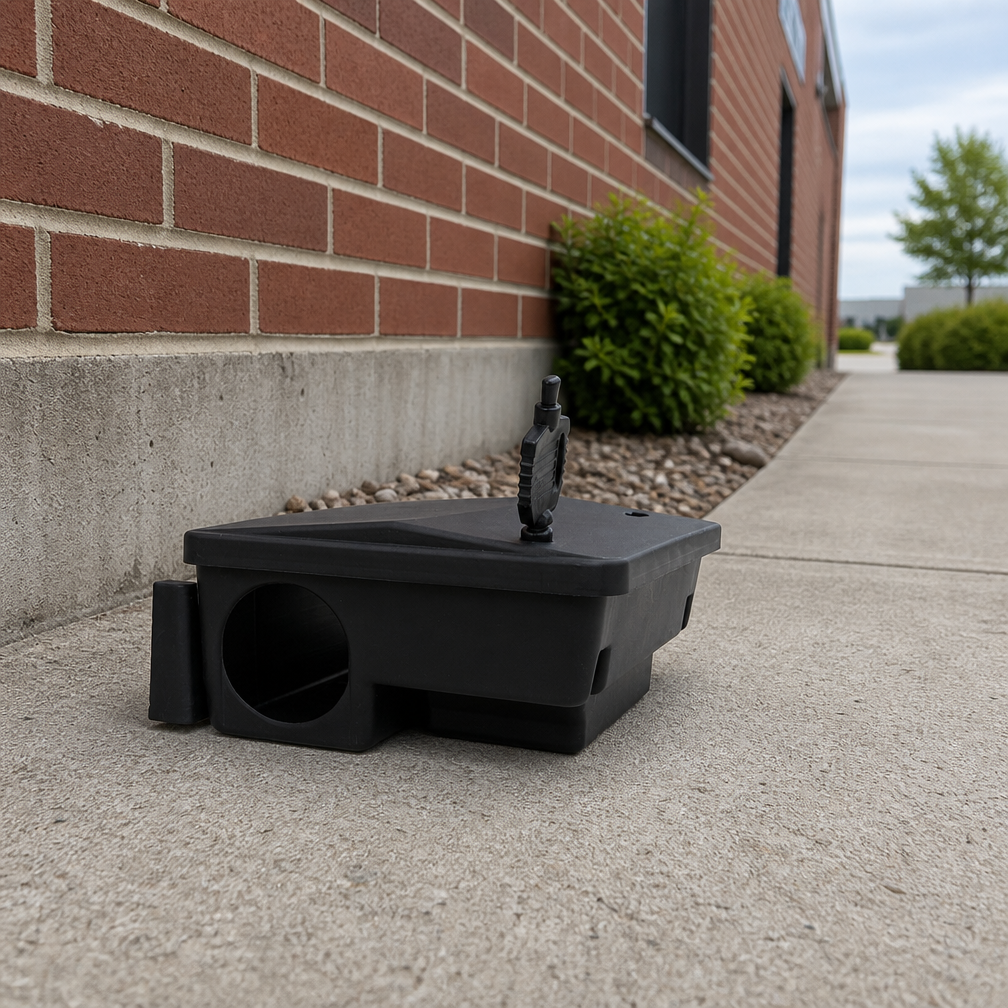
Exterior Property Line: Heavy-duty, locked, tamper-resistant bait stations anchored to concrete paver blocks. These can house EPA-approved rodenticide blocks or physical mechanical traps depending on your facility's ESG non-toxic policy.
Exterior Building Perimeter: Deploy a Rat Bait Station with Snap Trap alongside exterior walls. Snap traps provide immediate mechanical kill without introducing chemical baits that could lead to off-target carcass decomposition inside wall voids.
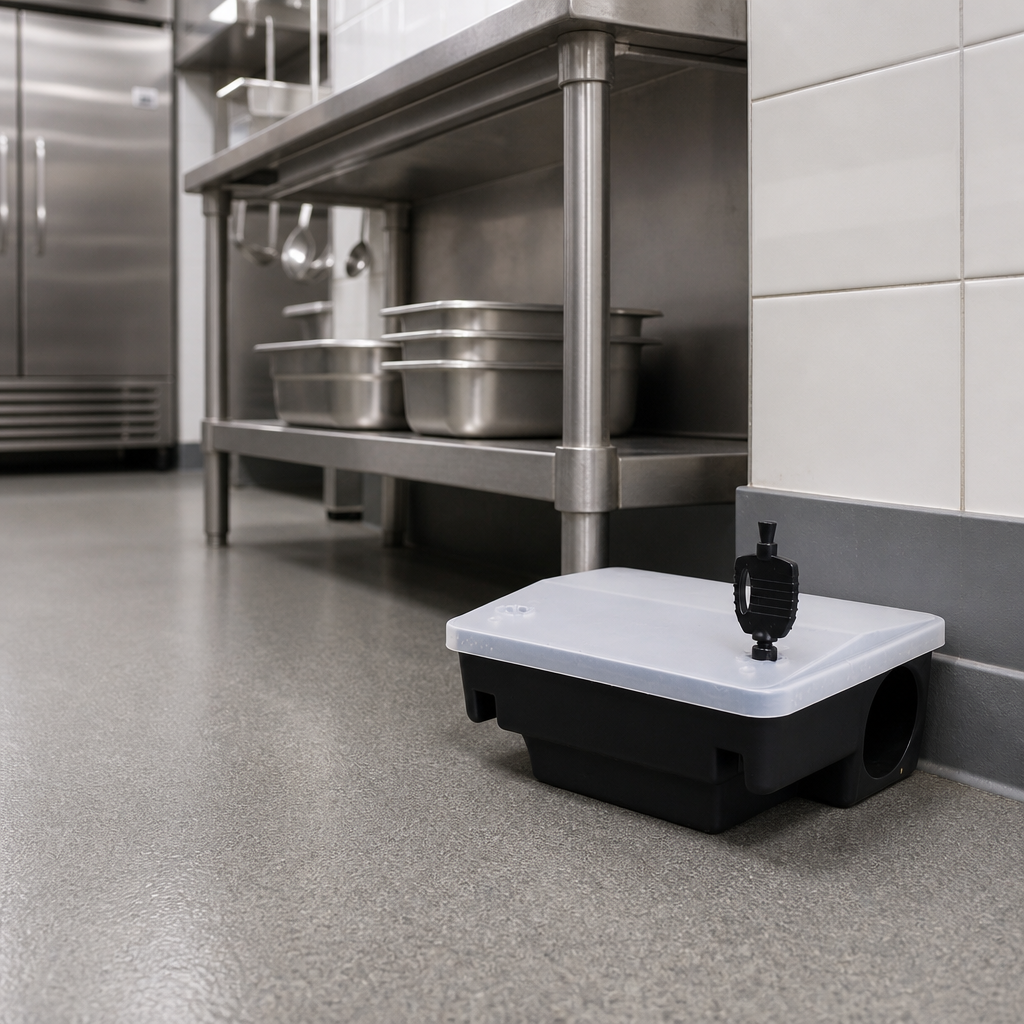
Interior Dock Doors & Foyers: Install a Clear View Bait Station on both sides of every roll-up door. The transparent inspection window lets technicians verify trap status in less than two seconds without opening the lid.
Tight Interior Racks and Mezzanines: Slide a low-profile Mini Bait Station beneath low racking tiers, motor housings, and electrical closets where full-size rat stations won't fit.
Zone 1: Exterior Fence Line -> High-Capacity Tamper-Resistant Box
Zone 2: Exterior Wall Base -> Rat Bait Station with Snap Trap
Zone 3: Interior Thresholds -> Clear View Bait Station
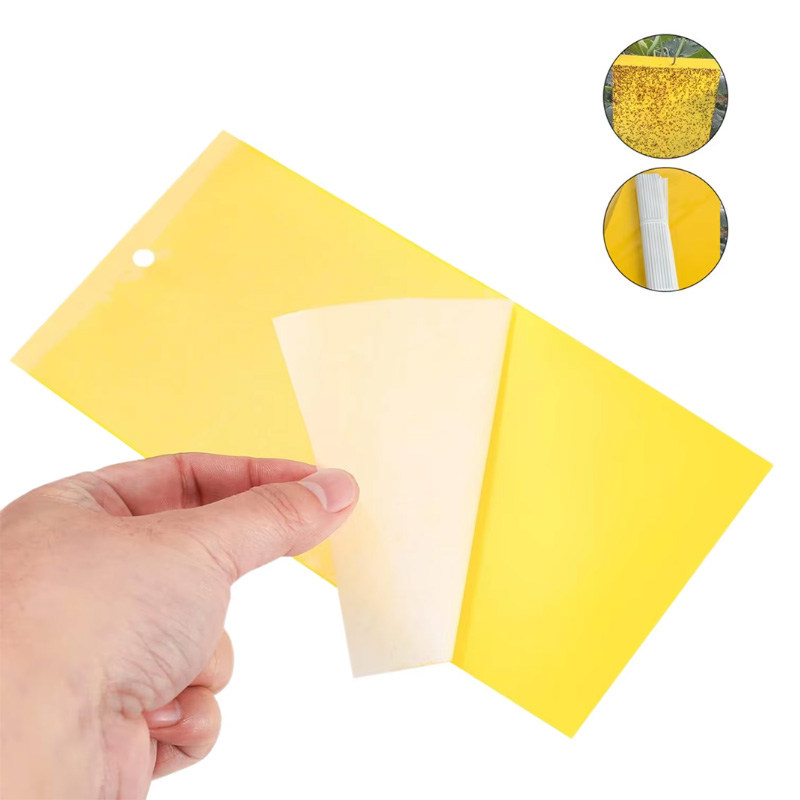
Zone 4: Racks & Narrow Runs -> Mini Bait Station + Pheromone glue traps
Step 3: Anchor Hardware and Set Mechanical Traps
Never place an unanchored station on bare ground. Wind, cleaning crews, forklifts, or non-target wildlife will shift them, breaking the natural rodent run along the wall base.
+-----------------------------------------------------------+
| WALL / FOUNDATION BASELINE |
+-----------------------------------------------------------+
│ │
[ Station ] <───────── 30="" 50="" to="" feet=""> [ Station ]
(Anchored) (Anchored)
▲ ▲
└────────── Tight against vertical run ───────┘
Secure each unit to a 12x12-inch concrete paver using 304 SS masonry expansion screws, or anchor directly to the building footing using liquid adhesive concrete anchors. Align station entry holes parallel to the wall, leaving no more than a 1-inch gap between the entry port and the vertical surface. Rodents exhibit thigmotaxis—they run with their whiskers touching vertical surfaces—so misaligned stations are simply ignored.
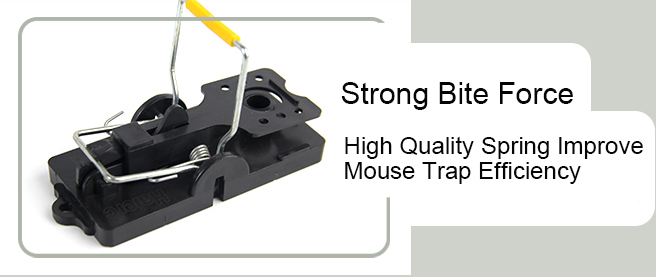
When arming a Rat Bait Station with Snap Trap, set the trigger sensitivity to match target pest size. Orient the yellow trip-plate facing directly toward the interior entry baffles. If you're running non-toxic monitoring under FSMA rules, load the bait prongs with an allergen-free, non-toxic monitoring block rather than food-based attractants like peanut butter that spoil or attract stored-product insects.
Step 4: Establish Inspection, Cleaning, and Barcode Logging
Service every unit on a scheduled 14-day or 30-day cadence. Affix a weatherproof barcode label inside the station lid or on the outer shell.
During each inspection:
Scan the station barcode to record date, time, and technician credentials.
Inspect trap status through the transparent window on your Clear View Bait Station installations.
Open the box using the dual-prong safety key.
Clear out insect webbing, organic dust, and moldy bait remnants.
Record pest activity (species, catch count, bait consumption percentage, zero-activity confirmation).
Reset snap springs and replace worn hardware immediately.
Once exterior stations are locked down, integrate non-toxic physical barriers inside production areas to prevent surviving pests from nesting.
Product Options That Fit Commercial Rodent Programs
Choosing the correct station hardware directly impacts technician route times and audit passing rates. High-traffic industrial environments destroy cheap plastic boxes in weeks. We manufacture our station bodies from UV-stabilized Polycarbonate and high-impact polypropylene to withstand direct UV exposure and heavy winter freezes without cracking.
Here is how our primary hardware lines match specific commercial operational demands:
Mini Bait Station: Built with an ultra-compact footprint, this station is tailored for mice and small rodent control in tight quarters. It fits neatly behind commercial kitchen prep tables, inside drop-ceiling panels, or beneath grocery gondola shelving. It features internal bait holder rods and supports non-toxic physical blocks or compact sticky inserts.
Rat Bait Station with Snap Trap: This dual-purpose station serves as the heavy-duty backbone for exterior perimeter defense. It houses either full-size mechanical snap traps or multi-block rodenticide arrays on horizontal and vertical 304 SS rods. The interior baffle architecture prevents water intrusion and stops curious non-target wildlife from reaching the trigger mechanism.
Clear View Bait Station: Engineered specifically for high-speed PCO inspection routes. The heavy-duty polycarbonate inspection window allows technicians to audit snap trap status or bait depletion levels from several feet away. You don't have to bend down and unlock the box on every single stop if there's no catch. This saves up to 45 seconds per station—which adds up to hours across a large logistics park.
Detachable Cap/Lid Monitoring bait Station: Designed for rapid sanitation and sanitizing washdowns in food manufacturing plants where strict hygiene protocols require frequent scrubbing of all pest hardware.
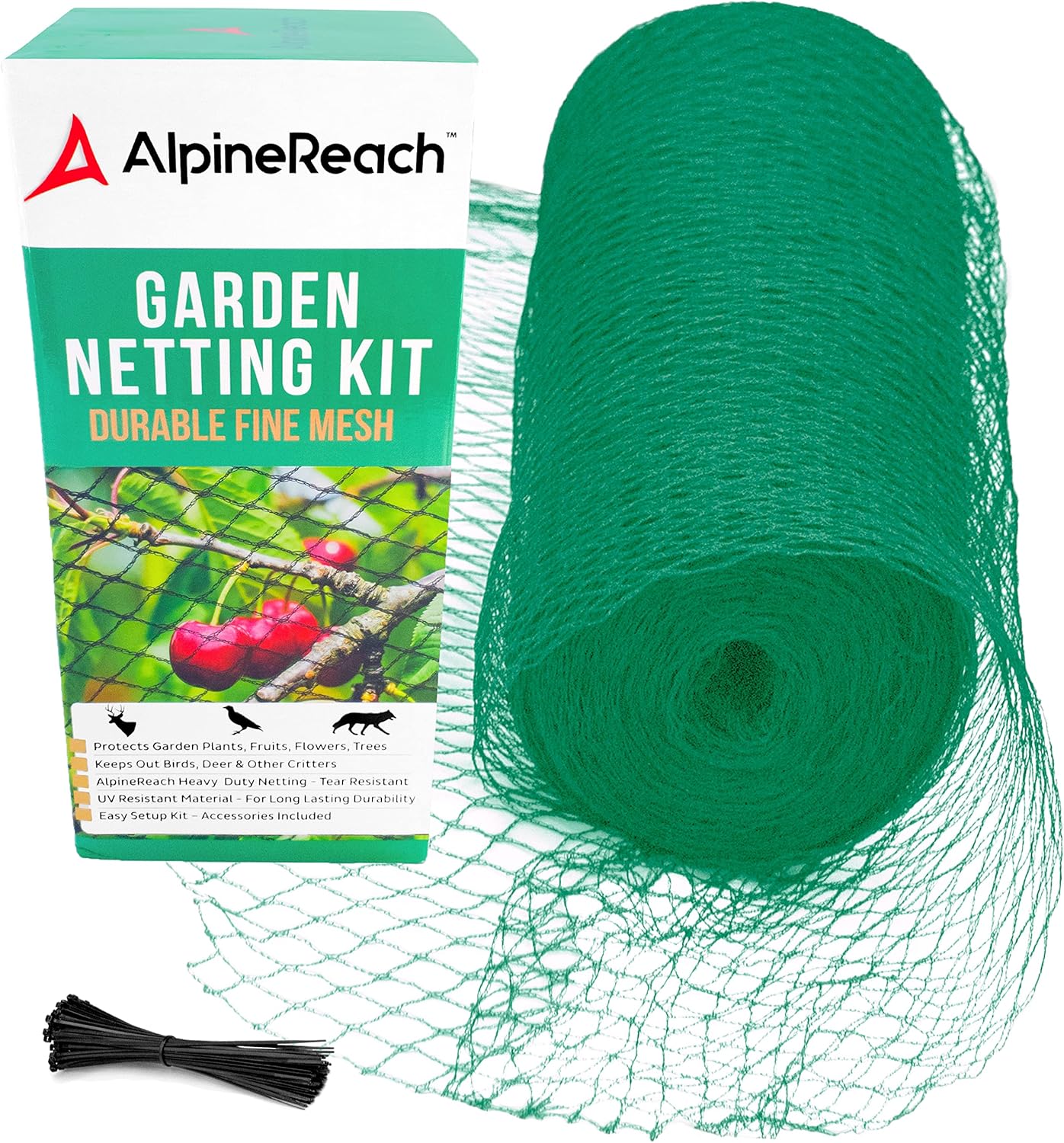
If your facility also manages surrounding green spaces or perimeter gardens that attract nuisance wildlife, combining rodent defense with physical barriers—such as a specialized bird net for garden plots or durable Bird Deterrents on rooftop staging zones—ensures complete structural integrity. Our factory produces diverse pest exclusion gear that serves international markets, whether you're a rodent control solutions distributor Canada-wide, a bird repellent systems buyer UK specialist, or a malla para aves importador sourcing multi-pest exclusion equipment.
The table below outlines our core commercial rodent station configurations against typical industry commodity boxes:
| Specification | RatTrap Standard | Industry Average |
|---|---|---|
| Housing Material | High-impact UV-stabilized Polycarbonate / PP Copolymer | Standard recycled Polypropylene (brittle in sub-zero temps) |
| Internal Components | 304 Stainless Steel bait rods & zinc-plated snap springs | Galvanized mild steel (prone to rust within 6 months) |
| Inspection Mechanism | Clear View top-window + Dual-prong tamper-lock key | Solid opaque lid requiring mandatory manual unlocking |
| Regulatory Compliance | CE, RoHS, REACH, EPA-compliant physical tamper design | Uncertified generic enclosures |
| Internal Trap Compatibility | Houses standard heavy rat snaps, mouse snaps, & glue pads | Proprietary trap fitment only |
| Operational Lifespan | 5+ years in harsh industrial outdoor environments | 1 to 2 years before latch cracking or lid warping |
By selecting hardware designed around real route conditions, your operations team minimizes replacement costs while presenting clean, uniform equipment during third-party client inspections.
Mistakes to Avoid & Pro Tips for Pest Professionals
Even top-grade equipment fails if installed incorrectly. Avoid these common operational pitfalls:
Placing Stations Too Far from the Wall: Leaving even a 3-inch gap between the station entry hole and the wall surface drastically cuts capture rates. Rodents avoid open floor spaces. Keep boxes tight to the baseboard.
Skipping Physical Anchors: Forklift tines, floor scrubbers, and high winds will shove unsecured stations across the floor. An unanchored box screams amateur installation to a BRCGS or FSMA auditor.
Over-Baiting with Perishable Attractants: Food-grade baits spoil fast in humid environments. Moldy bait repels rodents and attracts stored-product beetles. In food-sensitive zones, stick to synthetic non-toxic attractants, Pheromone glue traps, or clean snap triggers.
Ignoring Rooftop and Canopy Access: Techs often obsess over floor-level doors while roof rats enter through upper rooflines and exhaust vents. If pest birds are roosting near air intakes, address that perimeter with a reliable Pigeon Deterrent or exclusionary netting so rodents don't follow avian nesting materials down into drop ceilings.
Using Broken Lids or Lost Keys: Never force open a locked box with a flathead screwdriver. This damages the locking tabs, rendering the station non-tamper-resistant under EPA compliance. Always carry spare universal dual-prong keys on your service ring.
A quick pro tip from our field techs: wipe down the station exterior with a dry microfiber cloth during each service visit. Clean, dust-free boxes prove to auditors that your pest management program is actively maintained, not neglected.
Frequently Asked Questions
Q: How far apart should I space bait stations along an exterior warehouse wall?
A: For standard commercial facilities, space stations every 30 to 50 feet along exterior walls. In high-pressure zones like trash dumpsters, organic waste docks, or overgrown perimeters, reduce spacing to 20 to 25 feet. Haierc manufactures heavy-duty perimeter stations with mounting anchor holes to ensure spacing remains stable despite forklift traffic or bad weather.
Q: What makes a Clear View Bait Station better than a solid lid station for commercial routes?
A: A Clear View Bait Station features an integrated transparent window that allows technicians to inspect snap-trap triggers and bait consumption in seconds without opening the box. This cuts routine inspection time by up to 40% across large facilities while keeping the tamper-resistant lid securely locked according to regulatory standards.
Q: Can I use mechanical snap traps inside a Rat Bait Station with Snap Trap for FSMA audits?
A: Yes. In fact, FDA FSMA and BRCGS food safety protocols strongly encourage non-toxic mechanical snap traps inside building perimeters rather than loose chemical rodenticides. Haierc snap-ready stations are engineered to house commercial-grade rat snap traps securely, preventing accidental triggering by non-target wildlife or unauthorized personnel.
Q: Where is a Mini Bait Station most effective in a commercial facility?
A: A Mini Bait Station is designed for tight, low-clearance spaces where full-sized rat boxes cannot fit. Deploy them under commercial kitchen equipment, behind refrigeration condenser units, inside drop-ceiling voids, and within narrow racking aisles. They provide targeted mouse monitoring without obstructing daily operational workflow.
Q: How do Haierc bait stations withstand harsh winter conditions and UV exposure?
A: Haierc stations are injection-molded from UV-stabilized Polycarbonate and high-density polypropylene copolymers. They undergo rigorous impact and thermal testing to prevent cracking, fading, or lid-latch failure in temperatures ranging from -30°F to 140°F, ensuring years of dependable commercial service.
Conclusion & Soft CTA
Managing commercial rodent pressure requires the right strategy, consistent field habits, and tough physical equipment. By mapping high-risk entryways, adhering to strict 30-to-50-foot exterior intervals, and choosing specialized hardware like the Mini Bait Station, Rat Bait Station with Snap Trap, and Clear View Bait Station, you protect your client facilities from costly audit failures and product contamination.
FliesTrap by Haierc has supported pest management professionals and commercial distributors for over 18 years from our factory in Tianjin, China. All hardware is manufactured under ISO9001, CE, BSCI, and EPA standards, backed by a low 500-unit MOQ, custom OEM private labeling, and rapid 15–25 day production lead times. If you're upgrading your commercial service fleet or reviewing hardware specs for upcoming facility contracts, visit https://www.fliestrap.com or email sales@fliestrap.com to request product specification sheets and evaluation samples.
- Share this:

-



Category
Trending Now