




 Bird & Pigeon Pest Control
 MOUSE & RAT Pest Control
 Fly Pest Control
 Cockroach Pest Control
 Mosquito Pest Control
 Mole Pest Control
 Wasp Pest Control
 Moth Pest Control
 Bed Bug & Flea Pest Control
 Ant & Termites Pest Control
 Spider Pest Control
 Other Insect Pest Control
 Snake Pest Control
 Snail & Slug Pest Control
 Wildlife Pest Control
 Garden Products
 Virus Control
 Smart AI Trap
 Insecticides


Product News
How to Choose and Deploy Physical Fly Control Systems: A Guide for Professional Pest Control Operators and B2B Distributors
 By
2026-05-28
read
By
2026-05-28
read

How to Choose and Deploy Physical Fly Control Systems: A Guide for Professional Pest Control Operators and B2B Distributors
1. Hook
A large dairy processing plant in Rotterdam received a critical non-compliance notice during a routine NVWA inspection. The cause? A cluster of houseflies breeding in a forgotten drainage sump behind the pasteurisation unit. The plant faced a €15,000 fine, a two-day shutdown, and lost a major retail contract because the buyer’s own auditor spotted the problem first. Meanwhile, a distributor in Belgium had just shipped 200 glue boards to that same facility the month before – but the boards were placed in hallways, not near the actual breeding sites. The money spent on product was wasted. For professional pest control operators (PCOs) and B2B distributors, this scenario repeats every season. The difference between a passing audit and a costly failure often comes down to product selection and placement – not just chemistry. This guide, built on 18 years of factory experience supplying physical fly control hardware to markets in the UK, Germany, USA, and Australia, will show you how to systematically specify, deploy, and evaluate fly traps and monitoring systems that satisfy regulators and reduce callbacks.
2. Why This Problem Exists
Root causes – Fly infestations in food processing, agriculture, and commercial facilities are rarely random. They follow predictable patterns driven by seasonal temperature shifts (activity peaks above 20°C), structural weaknesses (cracked drains, unsealed wall voids, open waste bins), and regulatory gaps (inadequate documentation of monitoring). In the Netherlands, with its high humidity and dense animal farming, fruit flies and houseflies can develop from egg to adult in just 10 days under optimal conditions (University of Wageningen, 2022).
Common mistakes operators make – Many PCOs rely too heavily on chemical fogging or residual sprays, which provide temporary knockdown but do not address the source. Others buy the cheapest glue boards without verifying capture rate or UV light spectrum. A 2021 study by the British Pest Control Association (BPCA) found that 62% of failed audits in food facilities involved inadequate placement of physical traps – units were often installed in corridors or near entry doors rather than in the ‘hot zones’ where flies actually rest and breed.
Cost of inaction – Beyond fines (up to €50,000 for repeat offences under EU hygiene regulations), contamination from fly specks and regurgitation can destroy brand reputation. A single fruit fly in a packaged salad costs an average of €250,000 in recall expenses (FSA data). For a distributor, supplying the wrong product or failing to train PCOs in proper setup leads to churn, returned stock, and lost recurring contracts. The cost of inaction is not just a fine – it is the erosion of trust between distributor, operator, and end-client.
3. Solution Overview
Physical control vs chemical – why physical wins for compliance – Regulatory bodies like the NVWA, BRCGS, and FSSC 22000 increasingly favour non-chemical interventions in food zones. Physical traps (UV light traps, sticky boards, pheromone lures) provide continuous monitoring without introducing residues. They also generate objective data – catch counts – that compliance auditors demand in their records.
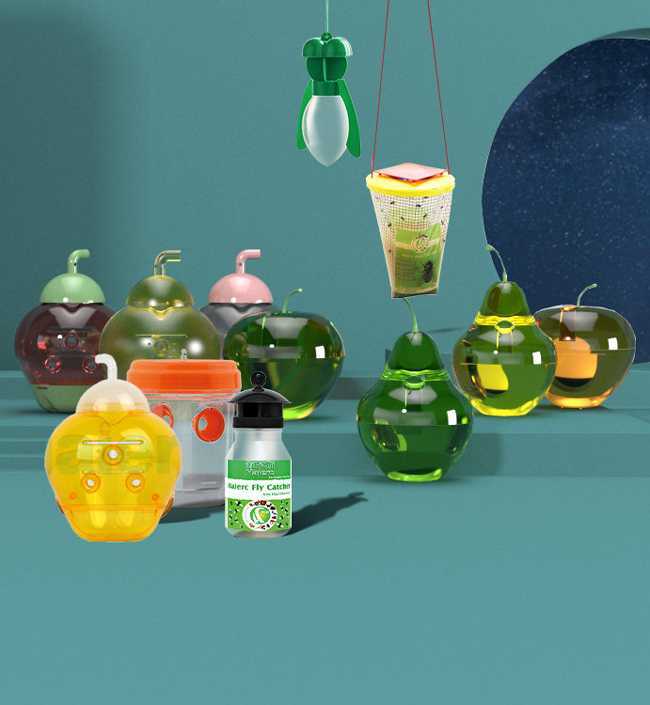
Brief intro to the product category – The right physical fly control system combines three elements: a durable housing (usually ABS or stainless steel), a calibrated light source (UVA wavelength 365nm attracts most flying insects), and a replaceable glue board with high-tack adhesive. For fruit flies and small flies, pheromone-enhanced sticky traps or liquid bait stations are more effective. FliesTrap offers a full range from basic disposable units to professional-grade monitoring stations designed for harsh industrial environments. Our factory has been designing and manufacturing these systems for 18 years, supporting OEM/ODM orders that meet specific voltage, size, and certification requirements (CE, RoHS, IP ratings).
4. Step-by-Step Guide
Step 1: Conduct a thorough site survey
Action: Walk the facility with a floor plan and mark every potential breeding site – drains, waste bins, behind equipment, warm air currents near ovens or boilers. Use a light meter to measure ambient light levels (UV trap effectiveness drops if placed in direct sunlight). Pro tip: In dairy plants, check the condensation trays under refrigeration units; they are a classic fruit fly reservoir.
Step 2: Calculate load requirements
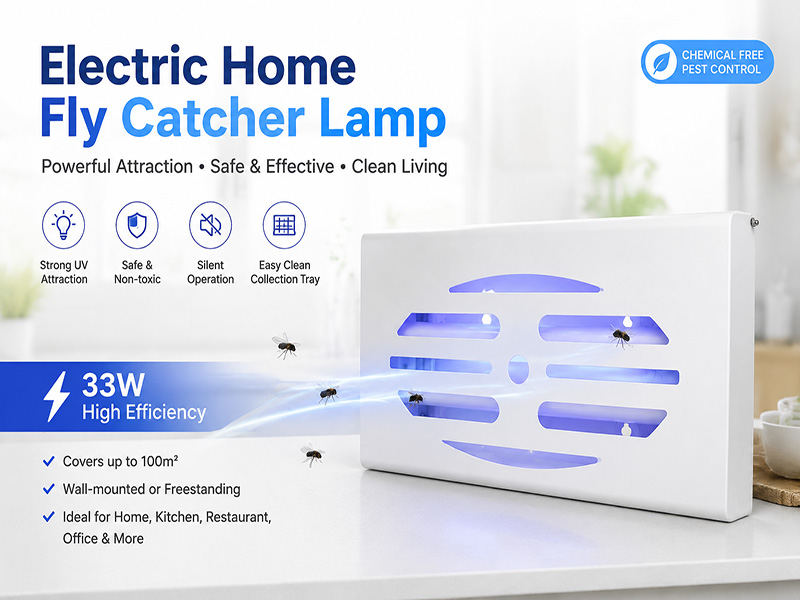
Action: For a standard UV electric fly killer (EFK), one unit per 50m² in low‑risk areas (storage) and one per 20m² in high‑risk areas (processing, packing). For glue boards alone, double the density. Refer to the manufacturer’s capture rate data – FliesTrap’s FT‑2000 model covers up to 100m² with a 3‑year bulb life. Note: Ceiling height above 4m reduces effective coverage by 30%.
Step 3: Choose the right product type based on target species
Action: For houseflies and bluebottles, use UV light traps with vertical glue boards (best capture at 1.5m height). For fruit flies (Drosophila spp.), use either small hanging sticky traps with a pheromone attractant or liquid bait stations placed near drains. For stored product pests (moths, beetles), use pheromone lures combined with sticky cards. Pro tip: Do not mix pheromone lures from different species in the same trap – cross‑attraction reduces efficacy.
Step 4: Placement – the 1.5‑2 metre rule
Action: Install all UV traps at 1.5 to 2 metres above floor level – the zone where flying insects naturally accumulate. Mount on walls away from doors, windows, and competing light sources. Text description of typical layout: in a rectangular processing hall (40m x 20m), place units every 10‑12 metres along two opposite walls, staggered to avoid gaps. For drainage areas, position a fruit fly trap directly above each drain cover. Pro tip: Avoid placing traps directly above food contact surfaces – if a glue board falls, it contaminates the zone.
Step 5: Install with proper electrical and safety provisions
Action: For hardwired units, ensure a dedicated IP65 weatherproof connection if outdoors. For battery‑powered or USB‑C models (like FliesTrap’s portable traps), confirm battery life – our field tests show consistent performance for 4 weeks on a single charge. Always secure the trap with anti‑theft brackets in public‑accessible areas.
Step 6: Set a monitoring schedule and record data
Action: Replace glue boards every 4 weeks or when 60% covered. Count and log species by week. FliesTrap provides a monitoring app (FliesTrap Pro) that lets PCOs photograph each board and upload the count. This data becomes your audit trail. Pro tip: Keep a separate log for ‘zero catch’ locations – these often indicate a placement mistake, not a clean environment.
Step 7: Evaluate and adjust quarterly
Action: Review catch data against seasonality. If counts spike in summer, add 20% more traps. If a trap consistently underperforms compared to neighbours, relocate it. Pro tip: Use a humidity indicator in trap housings – high moisture reduces adhesive tack. FliesTrap boards have a moisture‑resistant coating that maintains hold in 95% RH.
5. Product Comparison Table
| Feature | Basic Option (e.g., generic glue board) | Professional Option (e.g., UV electric fly killer) | FliesTrap Solution (FT‑3000 Monitoring Station) |
|---|---|---|---|
| Capture rate (flies/day) | 5‑10 (passive only, depends on airflow) | 50‑100 (UV attraction + fan) | 120‑150 (optimised UVA spectrum + high‑tack board + pheromone option) |
| Durability (housing material) | Cardboard or thin plastic (breaks in 6 months) | ABS plastic (1‑2 years under normal conditions) | 304 stainless steel with powder coating (5‑year warranty, IP54 rated) |
| Compliance certifications | None | CE, RoHS, sometimes BRCGS | CE, RoHS, BRCGS Grade A, ISO 9001 factory certification |
| Minimum order quantity (MOQ) | 500 units (distributor level) | 250 units | 50 units for professional series, 200 for custom OEM branding |
| Replacement consumable cost | €0.10 per glue board | €0.50 per board (proprietary size) | €0.35 per board (universal fit, available in bulk) |
| Power supply | Not applicable | 230V hardwired | 230V or USB‑C rechargeable (4 weeks battery) |
| Monitoring capability | Visual check only | Manual count | App‑based QR code tracking, photo logging, exportable reports |
| OEM/ODM customisation | Not offered | Limited colour/label changes | Full custom – housing colour, branding, voltage, lure type, packaging |
6. Common Mistakes
Mistake 1: Placing traps on the ceiling
Many operators assume that flies are only active near the ceiling, but UV traps lose 40% of their efficiency when mounted above 2.5m because the light beam scatters and flies do not fly that high in search of food. Mount at 1.5‑2m for best results.
Mistake 2: Using UV traps in food processing zones without a catch‑container
Open‑grid UV units can drop electrocuted insect fragments into product. Always specify models with a sealed catch tray or glue board that contains the remains. FliesTrap’s closed‑system design passes BRCGS hygiene inspections.
Mistake 3: Not accounting for competitor light sources
A UV trap placed near a window or bright LED will be out‑competed. FliesTrap’s research found that traps within 3m of a natural light source capture 60% fewer insects. Remedy: use shields or relocate.
Mistake 4: Ordering generic glue boards without checking adhesive tack
Low‑tack boards may not hold larger flies (bluebottles) that struggle and escape. The BPCA recommends a minimum peel strength of 12 N/25mm. FliesTrap boards exceed 14 N/25mm and are tested in humid environments.
Mistake 5: Skipping the data log
Auditors increasingly demand trend data, not just a current count. Without a log, you cannot demonstrate that the problem is under control. Use a simple spreadsheet or FliesTrap’s app – it takes 5 minutes per visit and saves your contract.
7. FAQ
Q: What is the difference between a professional fly trap and a consumer one?
A: Professional traps have higher capture rates (100+ flies/day), durable housings (stainless steel or impact‑resistant ABS), and replaceable glue boards designed for continuous use. They also meet hygiene certification standards like BRCGS and are built for long‑term monitoring in industrial environments.
Q: How often should glue boards be replaced?
A: Replace glue boards every 4 weeks or when 60% of the sticky surface is covered with insects or dust. In high‑dust environments (flour mills, woodworking), change every 2 weeks. Regular replacement ensures optimal capture and accurate monitoring data.
Q: Can I use the same trap for fruit flies and houseflies?
A: Not effectively. Fruit flies are attracted to acetic acid‑based lures or pheromones, while houseflies respond to UV light. Use separate traps with appropriate attractants for each species. Combination units exist but often compromise performance for one target.
Q: Do UV fly traps require any maintenance besides glue board changes?
A: Yes. Clean the UV tubes every 3 months with a dry cloth to remove dust that reduces light output. Check for insect debris inside the housing that could block the light. Replace tubes after 12 months even if still lit – UV output degrades over time.
Q: What are the minimum order quantities for OEM/ODM custom fly traps?
A: For custom branding (logo, colour, packaging), our minimum order is 200 units for professional series and 500 for basic models. For fully custom hardware (different size, voltage, lure formulation), the MOQ starts at 1,000 units. Contact our factory for a feasibility assessment.
8. CTA
Request samples or wholesale pricing from FliesTrap – evaluate our professional fly traps, glue boards, and monitoring systems tailored for your distributor network. Click here to contact our OEM/ODM team and receive a product guide with B2B pricing within 24 hours.
- Share this:

-



Category
Trending Now